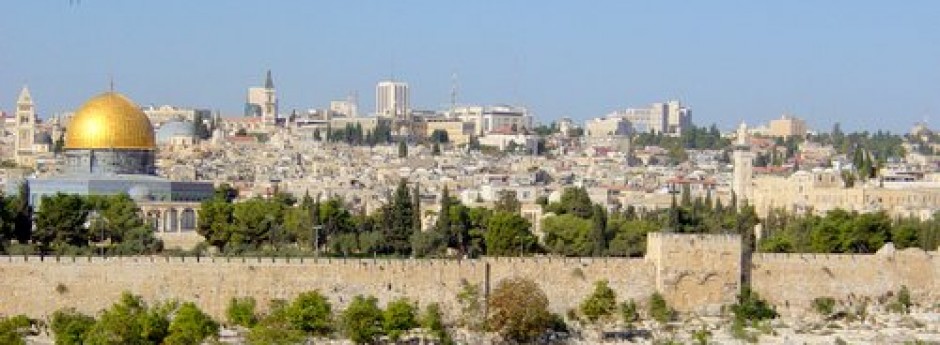
WHY CHRISTIANS DON’T LIKE JEWS
HOW WE CAN FIX THIS PROBLEM
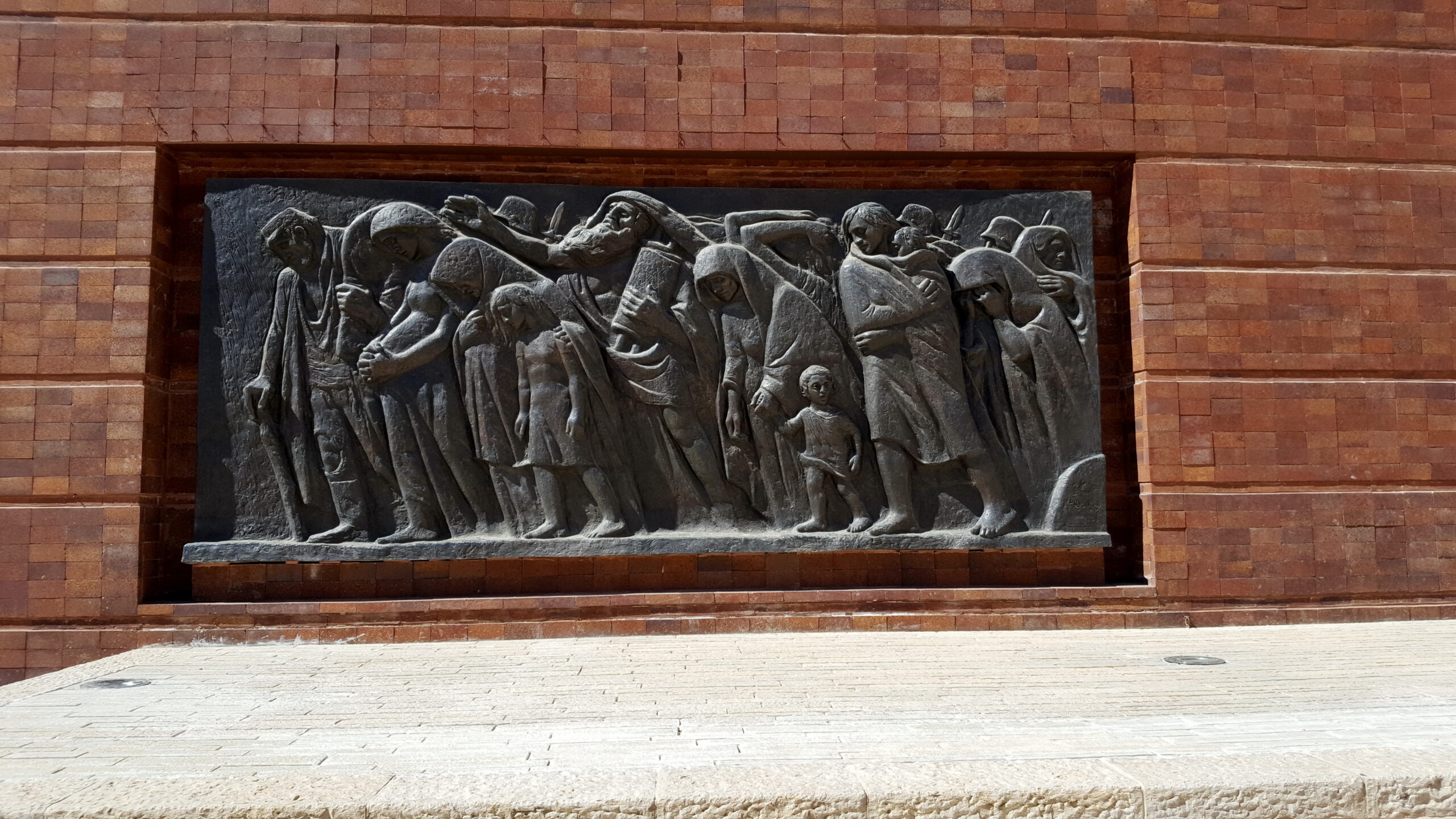
Jewish suffering portrayed at Yad Vashem in Jerusalem
BY
JIM GERRISH
Light of Israel
Colorado Springs, CO (USA)
Copyright, 2026
CONTENTS
CHAPTERS
- How Jesus was and is the Jewish Messiah
- How the church was born in Israel
- Are the Jews still God’s chosen people?
- The Arabs and the Palestinian problem
- Some strange facts about the Jews and their return
- How the Jews have blessed the nations
- People and nations who were cursed
- Amazing information about the Jews themselves
- Antisemitism, or how we treat our relatives
- Those who have shown mercy to Zion
- How did Zion get such a bad name?
- Is God himself a Zionist?
- Getting an attitude adjustment toward Israel
- When God has his day
- Israel’s prominence and glory in the last days
- When the new heaven and earth come together
- Endnotes
Bible Translations used or referred to
ASV (American Standard Version)
ESV (English Standard Version)
NAS (New American Standard)
NET (New English Translation)
NIV (New International Version) in all unmarked quotes
NKJV` (New King James Version)
NRS (New Revised Standard)
RSV (Revised Standard Version)
INTRODUCTION
The best-kept secret of the Christian Church is this: Jesus is Jewish! He was born in Israel, in a Jewish town, and of a Jewish mother. Like every faithful Jew, he worshipped in a Jewish synagogue and carefully observed the Jewish law. He kept the Jewish feasts. The fact that he was born of a Jewish mother would help qualify him to make aliya (immigration) into Israel today.
Why do we not all know these things? The Jewish writer David Hoffbrand asks: “You could attend many churches for every service of the year and hear almost nothing that would tell you Jesus was Jewish. Is this not a little odd?” 1
The second-best-kept secret is that our Christian family tree is also Jewish (Rom. 11:17). To hate Jews is to hate ourselves, for we Christians are now one with them. The Book of Romans tells us that we are wild olive branches grafted into the ancient olive tree of Israel. Its rich sap and life-giving juices should still be flowing through the church. It is sad and tragic that the church has tried for some 19 centuries to chop down this tree.
There is even what we might call a third-best-kept secret. We are told in the New Testament book of Ephesians (2:11-22) that the Gentile Church can never be complete and fulfill its role without the Jews. The Church and Israel will make up a new creation, a glorious, new temple of God. It is high time we Christians did some serious spiritual ancestry study.
How can the whole church, both Catholic and Protestant, be wrong for so long about Israel and the Jews? The reason seems clear. Satan has lied to us Christians for 1900 years. The very people who brought forth Abraham, Moses, David, and the prophets, the same people who brought forth Jesus and the apostles, have been despised and treated as lower than animals or even as low as dirt by Christians! There is something drastically wrong with our Christianity. It must be corrected quickly, or we may find ourselves allied with the Antichrist.
CHAPTER 1
HOW JESUS WAS AND IS THE JEWISH MESSIAH
What if Jesus himself appeared and visited one of our churches today? What if he were robed in the Jewish prayer shawl or tallit? Would he receive a lot of stares? Would he be accepted? Jesus came to fulfill the Law of God. Had he not worn a tallit, he would have broken the law as it appears in Numbers 15:37-41 and Deuteronomy 22:12. We know such garments were worn in the Lord’s time. An almost intact tallit from that period was discovered and can be seen today, along with the Dead Sea Scrolls display in Jerusalem.
Let us go further. When Jesus appears at his Second Coming, he will likely be wearing a tallit. Remember, “Jesus Christ is the same yesterday and today and forever” (Heb. 13:8). We are also told in Scripture that Jesus will return just like he left (Acts 1:11). Jesus departed the earth as a Jewish rabbi, and he will return the same way.
When he returns, all eyes will see him (Rev. 1:7). The terrifying cry that will probably go up from the lost all over the earth might well be, “O MY GOD, HE’S JEWISH!” We can understand why the lost will look for holes in the ground to hide from the face of this Jewish Messiah (Isa. 2:19; Rev. 6:16), whom they have almost universally hated and persecuted. Yes, Jesus is Jewish, and it is a fact that irks the world and many Christians as well.
LET US CONSIDER MORE EVIDENCE OF HIS JEWISHNESS
As we mentioned in our introduction, Jesus was born in Israel, in a Jewish town, and of devout Jewish parents. He was born to a Jewish mother, which was critically important in determining one’s Jewishness. He was circumcised on the eighth day as required (Lk. 2:21). His mother Mary went through the necessary purification rites by presenting him at the temple in Jerusalem and by making the required sacrifice for a new birth (Lk. 2:22-24).
Jesus’ parents were faithful and devout. We later see them journeying from Galilee to Jerusalem, likely on foot, to keep the Jewish festivals (Lk. 2:41). This was a distance of almost 100 miles (161 km).
Even as a child, Jesus expressed his interest in the temple and in his faith. We see him involved in deep theological discussions with the Jewish leadership (Lk. 2:42-49). The teachers were amazed at his great wisdom. It was Jesus’ practice to read the selected passages in the synagogue meetings (Lk. 4:16). Jesus kept Jewish holidays and festivals (Matt. 26:17-18, Jn. 2:23). As an example of his devotion to festivals, we even see him coming from the warm and pleasant Galilee to the feast of Hanukkah at Jerusalem (Jn. 10:22). This festival was held in the winter, with its cold rain and even snow in Jerusalem’s high country. Jesus honored the Sabbath, although he often disagreed with the Scribes and Pharisees concerning its meaning.
Like any devout Jew, Jesus greatly honored the law. He says of it in Matthew 5:17, “Do not think that I have come to abolish the Law or the Prophets; I have not come to abolish them but to fulfill them.” Today, many Christians seem to think that Jesus brought an end to the law. As a result, we often see a great deal of lawlessness in our churches. Jesus is the end of the law for righteousness (Rom. 10:4), but he is not the end of the law. Jesus came to write the law on our minds and hearts (Jer. 31:33; Rom. 2:15).
We often picture Jesus as a Gentile, but it is interesting that he initially instructed his disciples not to go into Gentile areas to minister (Matt. 10:5-6). He primarily confined his ministry to three Jewish cities, Capernaum, Bethsaida, and Chorazin. These cities make up what is called the Evangelical Triangle. Most of his miracles were performed in these cities (Matt. 11:20).
Jesus was also quite familiar with Jewish learning. It was customary for young Jewish boys to be taught at home and at the synagogue schools. David Flusser, who was Professor Emeritus of Hebrew University, says, “Jesus was part and parcel of the world of the Jewish Sages. He was no ignorant peasant, and his acquaintance with the Written and the Oral Law was considerable.” 1 Flusser also points out that Jesus had a “…profound Jewish education…” 2
German theologian Joachim Jeremias says of Jesus that he was “a prophet who completely remained within the limits of Judaism.” 3 The theologian James Charlesworth states, “…if two facts are unassailable today, they are Jesus’ deep Jewishness – he was a Jew – and his paradigmatic effect on Jews and Gentiles.” 4
Hoffbrand comments, “His Jewish identity will continue to have relevance even at the end – even for eternity. We neglect this at our peril.” 5 It may be that the second most serious church heresy, only to the denial of Jesus’ divinity, is the denial of Jesus’ Jewishness.
WHY WAS A MESSIAH NEEDED?
Why did the Jewish people need a Messiah? Also, why do Gentiles need one? We see in the Bible that God initially made mankind very good (Gen. 1:31). Unfortunately, humanity fell from its glorious position. The picture of Genesis chapter three perfectly describes the Fall of humanity. God made for them a beautiful and fruitful garden. He instructed them that they could eat of all the luscious fruit except one. They could even eat of the Tree of Life, but they could not eat of the Tree of the Knowledge of Good and Evil. In other words, they were not allowed to make their own decisions about what was good and what was evil. That was exactly what people did and are still doing even to this day.
We know from Genesis chapter 3 that our human forefathers ate of the Tree of Knowledge of Good and Evil. This caused the dreadful Fall of humanity. People began to decide for themselves what was good and what was evil apart from God’s revelation. People began to have “their own truth,” but that truth was far removed from the truth of God. All of civilization quickly went into a downward spiral of greed, rape, adultery, murder, and all gross lawlessness. Humankind had a big problem, and it was a God-sized problem that could not be solved by people. It was a problem that resulted in death, even an eternal death.
God, in his great grace, chose to solve that problem for human beings. In Hebrews 2:9, we read about God’s solution: “But we do see Jesus, who was made lower than the angels for a little while, now crowned with glory and honor because he suffered death, so that by the grace of God he might taste death for everyone.” Thank God for the words, “But we do see Jesus.” Thank God that Jesus took upon himself the death and destruction that we all deserved!
The sad part is that today, people by the millions and probably billions are still eating from this tree of knowledge and bragging about how good it is. They brag to us, although their mouths are puckered with the bitterness of sin. This is the “I think tree,” the “I have my truth tree,” and the “I’ll do it my way tree.” They could have eaten from Jesus, who is the Tree of Life, but instead they ate from the Tree of Death. Humanity has been in a fallen state ever since that early time.
We need to be perfectly clear that human beings are now fallen creatures. Sin is almost in our genetic makeup. There is also plenty of proof around today that people are sinners. The Bible says, “for all have sinned and fall short of the glory of God.” (Rom. 3:23). It says of humans: “They have all turned aside; together they have become corrupt; There is no one who does good, not even one,” (Psa. 14:3, cf. Psa. 143:2). The Bible adds, “For the wages of sin is death, but the free gift of God is eternal life in Christ Jesus our Lord” (Rom. 6:23 NAS).
It is only by believing in Jesus and receiving him as Savior and Lord that we humans can be saved eternally from our lost condition. How does that happen? It is very simple. In the Book of Romans, we read how we can be saved: “If you declare with your mouth, ‘Jesus is Lord,’ and believe in your heart that God raised him from the dead, you will be saved. For it is with your heart that you believe and are justified, and it is with your mouth that you profess your faith and are saved” (Rom. 10:9-10).
The Bible goes on to present this great salvation to everyone. The Scripture promises, “for ‘Whoever will call upon the name of the LORD will be saved’” (Rom. 10:13 NAS). That means you, and it means me. It means everyone who calls. This is the simple gospel message (good news) that the church has proclaimed for two thousand years.
Humankind’s rebellion brought a curse upon the earth. The Bible says that because Adam and his wife ate of the tree, the ground became cursed for their sake. From that point, humanity would have to live with the curse and endure painful toil and sweat for their food. Thorns and thistles would spring up to trouble them. Man and woman would end their sojourn in physical death. Then they would return to the ground from whence they came (Gen. 3:17-19).
The noted Francis Schaeffer says: “Francis Bacon, who could be called the major prophet of the Scientific Revolution, took the Bible seriously, including the historic Fall, the revolt of man in history. He said in Novum Organum Scientiarum (1620), ‘Man by the Fall fell at the same time from his state of innocence and from his dominion over creation.’” 6
Thus, we see that it was a double tragedy. Humanity lost its purity and its position of rulership over the earth. The Scripture seems to make clear that Satan was then able to take over that enviable position. He is now called the “prince of this world.” In the end, Satan will lose his position. John’s gospel states: “Now is the time for judgment on this world; now the prince of this world will be driven out” (Jn. 12:31 NIV).
So, Satan became the prince of the world and of this evil age. From the beginning, he made a terrible mess of trying to rule the world. Thank God, the Lord’s glory can still be seen in the heavens and on the earth, even during Satan’s reign (Psa. 19:1). So often, people blame God for the mess Satan has made and for death itself. The good news is that when Christ was crucified and resurrected from the dead, he began to bring about the end of Satan’s kingdom. He also brought the renewal of mankind’s ability to rule once again. That rule could only come through Jesus and not through human effort.
It is important that we get an understanding of God’s plan concerning the Fall of human beings and their recovery. God’s recovery program has been going on for a long time. In fact, his recovery plan was made from the very foundation of the world. In Revelation 13:8, we learn that Jesus the Lamb of God was slain for our sins in God’s heart even as the world was created. Now we need to simply believe this great biblical truth.
The whole program of salvation has been a long one. God first began with a man of faith whose name was Abraham. Abraham believed in God (Rom. 4:3). God then moved to create a faith-family through Abraham and his children, the Jews. Then he moved to create a faith-nation in Israel, Abraham’s faith-descendants. Through that faith nation, the Messiah Jesus was born. Through that faith nation, the saving gospel was preached to all nations. In a very real sense, those who receive the gospel become children of Abraham by faith (Gal. 3:29). They become grafted into the faith nation of Israel and become part of it (Rom. 11:17). Along with Israel, they make up the glorious holy temple that God is building (Eph. 2:11-22; 3:6). They become truly saved.
We must be careful not to distrust or despise Israel, because the nation has been God’s saving vehicle through the many ages, since salvation comes from the Jews (Jn. 4:22). The Bible assures us that the consummation of all human history will take place in and through Israel.
CHAPTER 2
HOW THE CHURCH WAS BORN IN ISRAEL
JESUS, THE CHURCH’S FOUNDER, WAS BORN IN ISRAEL
Jesus is Jewish. He was born in Bethlehem of Judea just as the prophet Micah had predicted (Micah 5:2). We see the fulfillment of this prophecy in Matthew 2:1-7. Until the beginning of his ministry, Jesus lived in Israel’s Galilee area in the little city of Nazareth. This was quite an ideal location for the Messiah, as this city was situated on a bluff that overlooked the Jezreel Valley and the famous highway, “The Way of the Sea” (Isa. 9:1). The well-known Bible commentator William Barclay says that this city was truly the “gateway to the world.” 1
In recent years, scholars have made a very important discovery about Nazareth. The big question through the centuries was whether Nazareth was spelled with a “tz” sound or a “z” sound. That question was answered by a 1962 archaeological discovery in favor of the “tz.” The root of the city’s name would be netzer, meaning shoot or branch, and aligning the city with the prophecy of Isaiah 11:1: “A shoot will come up from the stump of Jesse; from his roots a Branch [Heb. Netzer] will bear fruit.” 2 Until this discovery, scholars had wondered about the verse in Matthew 2:23, which reads, “and he went and lived in a town called Nazareth. So was fulfilled what was said through the prophets, that he would be called a Nazarene.” It was never possible for scholars to find the prophecy mentioned in this verse. Now they can easily connect it with Isaiah 11:1. Today, the name of the town in modern Hebrew is Nat-ze-ret. In Israel, Christians are called notz-rim, a name based on Natzeret.
THE CHRISTIAN CHURCH WAS ALSO BORN IN ISRAEL
The church that Jesus founded was born in Israel. It resulted from his three-plus years of teaching and ministry in Galilee, Jerusalem, and many other parts of the land. His chosen disciples were all from Israel. After his death and resurrection, the early church was founded in Jerusalem, and it was from Jerusalem that the first disciples went out to the known world.
It is clear in the New Testament that the church began as a totally Jewish organization. It was some time before the Samaritans were added under the ministry of Philip the Evangelist. The Samaritans were a mixture of Israelites and pagan peoples imported from Assyria.
Many Samaritans believed when they heard Philip’s preaching and saw the miraculous signs. When the disciples in Jerusalem heard of these events, they sent Peter and John to investigate and verify their situation. Peter and John prayed for the converts, and the Holy Spirit fell upon them all (Acts 8:15-16). Somehow, Jerusalem, as the sort of Mother Church, had to approve of their conversion. Of course, Peter had the keys to the kingdom and could open the doors of the kingdom to others besides the Jewish people (Matt. 16:19). Then, after several years, the church was opened to all the Gentiles also through the ministry of Peter.
We see the influence of the Jerusalem Church in Acts 10 after Peter introduced the gospel to the Gentiles. Peter quickly went up to Jerusalem to explain his actions. He was initially criticized (Acts 11:2), but when he told them his story, they agreed that God had allowed Gentiles to be included in the Jewish Church (v. 18).
The Apostle Paul, a devout Jew, then took the gospel to many parts of the Gentile Mediterranean world. Other Jews like Barnabas, Mark, Silas, and Timothy assisted him. Gradually, the apostolic roles were filled only by Gentiles. It is interesting that Timothy, who was half Jewish, seemed to close out the era of Jewish apostleship.
It is clear in the Book of Acts that Jerusalem was considered the headquarters for the movement in the first century. We note in 1 Thessalonians 2:14 that Paul patterned the Gentile churches after the Church in Jerusalem. Quite early, James, the half-brother of Jesus, became the leader in Jerusalem, while Peter continued to hold leadership in the whole church.
The good influence of James is observed later in the crisis concerning the circumcision of Gentile believers. This was dealt with at the Jerusalem Council in AD 49 or 50. Many believers in Jerusalem who had come from the legalistic Jewish sects felt that circumcision was necessary for all male converts. Through the leadership of Jesus’ half-brother James and the assistance of Peter, the council ruled that circumcision was not necessary for Gentile believers (Acts 15).
Many examples demonstrate the relationship of the early Church to Jerusalem and Israel. Early Jewish Christians regularly worshipped at the temple (Acts 2:46-47; 5:12-16; 21:26). We know from Scripture that Jesus’ followers observed the Sabbath and Jewish festivals (Lk. 4:16, 31; Jn. 13:1-7). Although Paul was called to the Gentiles, he once hurried across the Mediterranean from Gentile lands to Jerusalem that he might arrive in time to keep the Jewish feast of Pentecost (Acts 20:16). It is evident that the earliest Christians showed deep respect toward the Jewish Law (Acts 21:20). It is also evident that they deeply respected the temple, the nation of Israel and the Jewish people.
In earlier Christian times, the Antioch Gentile Church had sent an offering to ease the famine at Jerusalem (Acts 11:27-30). Later, Paul spent a great deal of effort collecting a large offering from Gentile churches for Jerusalem’s poor (1 Cor. 16:1-4; 2 Cor. 8:1-9; Rom. 15:25-32). It is amazing that the first general offering of the Christian Church was an offering for Israel. Paul said: “…For if the Gentiles have shared in the Jews’ spiritual blessings, they owe it to the Jews to share with them their material blessings” (Rom. 15:27).
We are told by the Christian historian Eusebius that the Church in Jerusalem continued as a Jewish Church for several generations. To illustrate this, the first fifteen bishops of Jerusalem, until the time of Hadrian (AD 135), were all Hebrews. After the fifteenth bishop, Narcissus, we hear of Marcus, who is listed by Eusebius as the first Gentile bishop of Jerusalem. 3 He also tells us that the whole Israel Church consisted of Hebrews 4 Actually, the church was considered a sect of Judaism, as we learn in Acts 2:47 and 24:5.
The Bible scholar Daniel Gruber remarks: “In the first century, the most heated, controversial, doctrinal issue of all that the church faced was: ‘How do the Gentiles fit into all this?’…Today, the most heated, controversial, doctrinal issue that the church faces is: ‘How do the Jews fit into all this?’” 5
WHAT CAUSED THE DECLINE OF THE JEWISH CHURCH?
There were probably several factors that caused the decline of Jewish influence in the church.
First, there began to be a great influx of Gentiles into the assemblies. The missionary work of Paul and others was bringing in a great harvest. Soon, the Jewish believers became greatly outnumbered. Second, the church conference of Acts 15 likely offended many legalistic Jews, causing them to form conservative groups. Third, one of the biggest problems was the Jewish revolt against Rome, or the First Jewish Revolt from AD 66-73.
In this revolt, the Messianic Jews (Christian Jews) fled to Pella in the present-day Jordanian foothills. This was about 60 miles (96 km) northeast of Jerusalem. They probably fled partly due to Jesus’ instructions as seen in Luke 21:20-22. When this revolt ended, the Jewish population of Israel and Jerusalem in particular was decimated. The church historian Eusebius puts the number of captives at 97,000, and those who perished at 1,100,000. 6 Jewish influence shifted to the Galilee and then eventually back to Babylonia. Many Jewish people were spread abroad to the nations in what came to be called the diaspora.
Before the Roman war, the church was considered a sect of Judaism, as we mentioned. At the close of the war, a rabbi named Yohanan ben Zakkai gained favor with the Romans. He then opened a school at Yavneh (Jabne or Jamnia). There, he began a reformation of Judaism. As a result of his work, somewhere around AD 90, the school adopted the Birkat ha-Minim (the Heretic Benediction). This benediction was added to the Shemoneh Esreh (the Eighteen Benedictions) that are recited every day by devout Jews. While it was not drafted against Christians exclusively, it nevertheless included them. 7 The benediction forced Judeo-Christians (Notz-rim) and other sectarian groups to curse their own beliefs. We can understand how Christians would have had a difficult time listening to their faith being cursed in the meetings.
After the first revolt, nationalistic and messianic aspirations continued to run high in the land. This was spurred on when Emperor Hadrian decided to build a Roman colony named Aelia Capitolina on the ruins of Jerusalem and dedicate it to Jupiter. This revolt was led by Simon Bar Kokhba, whom the famed Rabbi Akiva proclaimed as the messiah. The second war, called the Bar Kokhba Revolt, was crushed by Rome, with thousands of Jews once more killed and sold into slavery. American theologian Marvin Wilson comments, “…the war of A.D. 132-135 was, for all essential purposes, the final major national blow that severed the two communities.” 8 From this point, the Jewish Church was fragmented and scattered.
CHAPTER 3
ARE THE JEWS STILL GOD’S CHOSEN PEOPLE?
Some people have come to look upon Israel as a sort of husk that produced the grain (Christianity). Now that the grain is produced, the husk has fallen away and is of no account. From such thinking, replacement theologies of various sorts have come about. We have to ask, are the Jews still God’s chosen people? The Bible has this to say about them:
For you are a people holy to the LORD your God. The LORD your God has chosen you out of all the peoples on the face of the earth to be his people, his treasured possession. (Deut. 7:6).
We might wonder why in the world God would choose the Jews? They are certainly not the most plentiful people on earth, since they number some 15.8 million today. Actually, in the next verse of Deuteronomy, God calls them the smallest of all the earth’s people.
Well, God is God. He is omnipotent and omniscient. He has a right to choose whomever he wishes. We realize that the choice of Abram, whom God later renamed Abraham, extends back 4,000 years to Genesis 12:1-3.
The LORD had said to Abram, “Leave your country, your people, and your father’s household and go to the land I will show you. I will make you into a great nation and I will bless you; I will make your name great, and you will be a blessing. I will bless those who bless you, and whoever curses you I will curse; and all peoples on earth will be blessed through you.“
God chose a man of faith, then a family of faith, and finally a nation of faith. He did this for the ultimate salvation of the earth and of humanity. He has never changed his mind about Israel, and he never will (Jer. 31:37). We even hear Paul say in the New Testament that God will never reject his chosen people (Rom. 11:1-2). Clearly, Abraham and his children will become a great blessing to all people on earth who understand God’s program and who bless Israel.
Today, thousands of years later, the choice of Abraham is still in effect. When we look around, we see many nations and peoples that are cursed for their hatred of Israel. We have only to think of the poor people of Gaza, Yemen, Somalia, Syria, and Lebanon for starters. The United States has been greatly blessed by the Jewish people since its founding. The US has allowed the Jewish people to enjoy a large degree of peace and acceptance within its borders.
An important part of God’s great plan was that in the fullness of time, he would bring forth his Messiah from Israel. The Messiah came not just to save Israel but to save the whole world.
The choice of Israel has caused a lot of suffering for the Jewish people. A good number of Jews would just as soon not be chosen. They would speak in the words of Tevye, in the play Fiddler on the Roof. When Tevye heard of another persecution coming his way, he had one of his little talks with God, saying: “I know, I know we are the chosen people, but once in a while can’t you choose someone else!”
Nevertheless, the Jewish people are chosen by God and are very special to him. In Psalm 148:14, we read: “He has raised up for his people a horn, the praise of all his saints, of Israel, the people close to his heart. Praise the LORD.” In Psalm 147:19-20, it is said of God that, “He has revealed his word to Jacob, his laws and decrees to Israel. He has done this for no other nation; they do not know his laws. Praise the LORD.” It would be the Jews and only the Jews who would guard and preserve the word of God and deliver it down to us all. In some way that we do not understand, “When the Most High gave the nations their inheritance, when he divided all mankind, he set up boundaries for the peoples according to the number of the sons of Israel” (Deut. 32:8 NIV). Yes, when the Lord established the nations of the world, their borders were drawn relative to the number of Jewish people they would contain. The Jews are special! They have managed to survive as a people for thousands of years.
The Swedish Bible scholar Goran Larsson states, “There is a story of Friedrich the Great of Prussia. He was an atheist, but had a very pious medical doctor. Once, he demanded of his doctor: ‘Give me proof that there is a God! But hurry up, I have no time!’ The doctor replied immediately: ‘The Jews, Your Majesty!’” 1
NOT ONLY THE JEWS WERE CHOSEN, BUT THE LAND OF ISRAEL WAS ALSO CHOSEN BY GOD.
Just as God has chosen a special people, he has also chosen a special land. It is known as the land of Israel. The land, unlike all other lands, was given to Israel as an eternal inheritance to Father Abraham and his heirs. God says in Genesis 17:8: “The whole land of Canaan, where you now reside as a foreigner, I will give as an everlasting possession to you and your descendants after you; and I will be their God.” The world has never understood or accepted this divine grant, and neither is it accepted today.
We read about this eternal gift and covenant in Genesis 15:9-21. The grant was vast, from the River of Egypt to the Euphrates River. That would involve all the present lands of Israel, Gaza, the so-called West Bank (Judea and Samaria), as well as much of Jordan, Syria, and Lebanon. This ancient covenant was carried out by the slaughter of animals. Their bodies were laid out, and to conclude the agreement, the covenant makers traditionally walked together between the bloody parts. It is of great interest that on this occasion, Abraham fell into a deep sleep, and God alone walked between the parts. Thus, the Lord made clear that he himself is the maker and sustainer of the land covenant. It does not matter what Israel does or does not do; the land covenant with Israel will always remain permanent and eternal.
God is quite emphatic about the making of this eternal land covenant with Israel. The title deed has been legally written, recorded, and published in the Bible for all to see. The Lord even goes to the extreme of swearing an oath about it in Genesis 24:7.
Can we imagine the Almighty God standing before all his angels, heavenly beings, principalities, powers, and saying something like this: “I, God Almighty, do solemnly swear that the land of Israel shall be the possession of the children of Israel forever!” Since there was no one greater for him to swear by, he swore by his own great name, as we see in Hebrews 6:13-14.
Interestingly, the final judgment of nations by God will concern their breach and disregard of this sacred land covenant (Joel 3:2).
HOW DID WE MISS THE BIGGEST STORY SINCE CHRIST?
About half of the chosen people have now returned to the chosen land. Much of this happened in our lifetimes, right before our eyes. Unfortunately, because of the latent antisemitism, even in our churches, we all missed it. Some twenty-five centuries ago, the prophet Isaiah said to Israel: “Do not be afraid, for I am with you; I will bring your children from the east and gather you from the west. I will say to the north, ‘Give them up!’ and to the south, ‘Do not hold them back.’ Bring my sons from afar and my daughters from the ends of the earth – everyone who is called by my name, whom I created for my glory, whom I formed and made” (Isa. 43:5-7). This is talking about the Jews returning to their land in our time! We remember that they were scattered over the earth after the wars of AD 70 and 135.
Isaiah also prophesies: “And it shall come to pass in that day, that the Lord will set his hand again the second time to recover the remnant of his people, that shall remain, from Assyria, and from Egypt, and from Pathros, and from Cush, and from Elam, and from Shinar, and from Hamath, and from the islands of the sea” (Isa. 11:11 ASV). Isaiah makes clear that this is not the return from Babylon but a second return that has happened and is still happening in our day.
The prophet Jeremiah says this second return of Israel to their land will be greater than when Moses brought the children of Israel out of Egypt long ago (Jer. 16:14-15). How could such an incredibly important event happen, and we all miss it?
This whole story began in 1882, and it continues to the present hour. The Jewish population of Israel at this writing is now over 7 million. The people of Israel have returned to their land from the nations, and all Hell is fighting against this reality. Read about this whole, wonderful story in the author’s free book, Does God Play Favorites? Chapter 6, “A Nation Is Reborn.” 2 We realize by all this that God keeps his eternal covenant with the Jewish people and the land of Israel, regardless of the passing of time.
CHAPTER 4
THE ARABS AND THE PALESTINIAN PROBLEM
In the previous chapter, we learned that God specifically gave the land of Israel to the Jewish people. This is no doubt the oldest and most impressive title deed in the world. It has not only been written but also published in the Bible for the whole world to see. God gave the land to Abraham and his heirs forever, through his son Isaac and grandson Jacob. Notice that he specifically did not give the land to Ishmael and his Arab descendants (Gen. 17:20-21).
Today, Ishmael is looked upon as the father of the Arab people. Spiritually speaking, Ishmael lives on, so we have a four-thousand-year-old problem of the chosen and the not chosen. It is undoubtedly one of the most serious difficulties on earth.
On the surface, it would seem that the Creator did not love Ishmael, since he was the firstborn and should have gotten the inheritance, although he was the child of the slave wife, Hagar. However, God greatly loved Ishmael, and he loves the Arabs today. God promised to bless Ishmael, multiply him into twelve princes, and make him great. Yet, he would not become heir of the covenant (Gen. 17:18-20; 21:8-13).
In fact, God loved Ishmael so much that he has now given him twenty-two sovereign nations that make up the Arab League. He has given the Arab League over five million square miles of territory as compared with only eight thousand square miles in Israel. 1 God has made the Arab world incredibly rich with 43 percent of the world’s total oil reserves. 2 Nevertheless, he will not give the land of Israel to Ishmael. That is the crux of the problem in the Middle East today.
Later, we see a similar struggle played out in the children of Isaac. His child Esau was born first and should have received the promises, but his twin brother Jacob supplanted him and took over the heritage (Gen 27:1-40). Esau became a child of the desert and established the kingdom of Edom.
THE ARAB “PALESTINIANS”
We hear a lot about Palestine today, and various groups, even in the US, are frantically demonstrating for Palestinian rights. Because of the ignorance of history in our schools and colleges, it is easy for students to fall prey to mythology and fabrication.3
A simple study of Middle East history will reveal some shocking truths. Palestine was a name given to the land of Israel after the Jewish Bar Kokhba Revolt against Rome in AD 132-136. The land was renamed by Caesar. It was named in derision to erase all Jewish connections to the land. The name was derived from the ancient Philistine enemies of Israel. With Israel’s defeat, thousands of Jews were killed or sold to foreigners as slaves. The city of Jerusalem was even renamed, a pagan shrine was built on the Temple Mount, and Jews were forbidden to enter the city. All this illustrates an important and unknown historical fact. The Jewish people were the very first Palestinian refugees. 4
What Rome did was not anything new for Israel. Through the ages, many people had tried to take their land, including Edomites, Moabites, Assyrians, Babylonians, and a host of others. The Romans just did the best job of it, exiling God’s people for almost two thousand years. In Psalm 83:3-4, we see the clear, sworn purpose of all these ancient people, as well as all the present enemies: “With cunning they conspire against your people; they plot against those you cherish. ‘Come,’ they say, ‘let us destroy them as a nation, so that Israel’s name is remembered no more.’”
After Rome’s demise, Islam arose in the seventh century. Islam began in Arabia among the heirs of Ishmael. With its rise, the truly diabolical nature of the chosen and not-chosen struggle became apparent. The Muslim Arabs made Israel one of their first major targets, conquering Jerusalem in AD 638. For some strange reason, they immediately felt compelled to build two of their three important religious shrines on the Temple Mount. These were the Dome of the Rock and The Al Aqsa Mosque. Thus, the Arabs quickly drove their religious claim deeply into the heart of Israel. It seemed that the religion of the other brother had prevailed, and for most of the following 1300 years, Islam ruled Jerusalem and the land of Israel.
We can almost hear the cry of scorn recorded in Ezekiel 36:2, 5:
…The enemy said of you, “Aha! The ancient heights have become our possession…” this is what the Sovereign LORD says: “In my burning zeal I have spoken against the rest of the nations, and against all Edom, for with glee and with malice in their hearts they made my land their own possession so that they might plunder its pastureland.”
And plunder the land they did. Throughout the period of Muslim possession, the land was abused and neglected. In modern times, the Muslim Turks even taxed the trees. 5 We can imagine what poverty-stricken peasants did. They simply cut the trees down. Palestine became a wasteland because of this and because of many other abuses.
The Arabs have painted Palestine as a paradise before the coming of the “evil” Jews. Yasser Arafat, the PLO leader at the time, claimed: “The Jewish invasion began in 1881…Palestine was then a verdant area, inhabited mainly by an Arab people in the course of building its life and dynamically enriching its indigenous culture.” 6 So much for revisionist history. Let’s take a look at the facts.
Many early travelers to the Holy Land in the last few centuries bear uniform witness to its utter desolation. Constantine Volney was one of these explorers. He says, “…the traveler meets with nothing but houses in ruins, cisterns rendered useless, and fields abandoned. Those who cultivated them have fled….” 7 Volney estimates the population of Palestine in 1785 to be no more than 200,000 souls.8
The American author, Mark Twain, made an interesting assessment in 1867 after traveling over much of the land. He reported:
Of all the lands there are for dismal scenery, I think Palestine must be the prince. The hills are barren, they are dull of color, they are unpicturesque in shape. The valleys are unsightly deserts fringed with a feeble vegetation that has an expression about it of being sorrowful and despondent…Palestine sits in sackcloth and ashes. Over it broods the spell of a curse that has withered its fields and fettered its energies…Renowned Jerusalem itself, the stateliest name in history, has lost all its ancient grandeur and has become a pauper village…Palestine is desolate and unlovely. 9
Abundant historical records show that the Arab population soon flooded into the land from surrounding nations because of the vast enterprises of the Jewish returnees.10 The Arabs came to take advantage of the new jobs being created. They simply wanted to better their poor economic situation.
THE PALESTINIAN PLOT TO STEAL THE LAND
After Rome, and through the ages, many people lived in what has been called “Palestine.” There was always a good number of Jews who lived in the land. They were called “Palestinians.” Even early in the 20th century, the Jewish English newspaper, now called The Jerusalem Post, was called The Palestine Post, and the Israel Philharmonic Orchestra was called the Palestine Philharmonic Orchestra. 11
A very surprising historical fact is that the Arabs of the land vehemently refused to be called Palestinians. The Arab historian Philip Hitti stated before the Anglo-American Committee of Inquiry in 1948, “There is no such thing as Palestine in [Arab] history, absolutely not.” 12 The noted Arab leader, Auni Bey Abdul-hadi told the Peel commission, “There is no such country [as Palestine]! ‘Palestine’ is a term the Zionists invented!… ‘Palestine is alien to us; it is the Zionists who introduced it!’” 13
In the miraculous war of 1967, the Arabs suffered a horrible defeat at the hands of Israel. In a mere six days, the five Arab armies, which vastly outnumbered Israel, were defeated. The storm clouds had been gathering for several years. At the Cairo Arab Summit in 1964, the PLO, or Palestinian Liberation Organization, was founded. Egypt’s President Nasser began to publish much anti-Israel rhetoric. His Egyptian forces moved menacingly across the Sinai towards Israel, and the Straits of Tiran were closed to Israeli shipping. In the north, Syria was bombarding Israeli settlements from the Golan Heights. It seemed that war had come against Israel from the nations on all sides.
Because of the grave situation, Israel decided to preempt the war and struck all its surrounding enemies in a surprise air raid. The air forces of all the attacking nations were destroyed, mostly on the ground. Although outnumbered three to one, the Israelis conquered all of the Sinai, including Gaza; the West Bank (Judea and Samaria), East Jerusalem, including the Temple Mount, and the Golan Heights. 14 Egypt’s President Nasser expressed all Islamic feelings when he said, “To the disaster of Palestine there is no parallel in human history.” 15 Because of their shameful defeat, the Arabs turned to terrorism and to political propaganda to support their cause. The massive losses of the Muslims in the 1967 war seemed to throw fuel on the fire of Palestinian claims.
It took little imagination in the late 1960s for the Muslims to dream up the idea of an Arab Palestinian state, a state stolen by the Jews. This pretext has been the basis of much of the struggle in the Middle East since that time. Of course, the Muslims had always resisted Israeli settlement from the earliest days. In my 2000 book, Does God Play Favorites? I try to sum up the Palestinian problem by calling the whole thing what it is, a myth:
For decades, people and nations, even impressive world bodies, have played their part in supporting and perpetuating this myth. In a sense, they have acted out Anderson’s famous fable – The Emperor’s New Clothes. In that fable, while everyone pretended and swooned over his new clothes, the stark truth was recognized and blurted out by a little child. The emperor was naked! The stark truth today is that there never was a Palestinian state in all the annals of human history. There was never a distinct Arab Palestinian people. The majority are a mixture of Arab peoples who migrated into Israel to seek jobs. These jobs were provided by Jewish development in the area after 1881. The Arab-Palestinian identity as it is presented by the PLO and related groups thus far seems to be flawed and even fraudulent. We might ask, “Is it all a political ruse to steal away the heritage of Israel?” 16
How amazing it is today that so many of the world’s people and its leaders are calling out for the establishment of a Palestinian state!
CHAPTER 5
SOME STRANGE FACTS ABOUT THE JEWS AND THEIR RETURN
When the Jewish people began to return to their land in 1882, they eventually came from over 100 different nations. Some Jewish groups had been dispersed from Israel for over 2500 years. Somehow, the Jewish people had maintained their existence since the time of Abraham, or close to 4000 years ago. We would be hard-pressed to find another people-group that has been scattered among the nations for so long and yet has maintained its nationhood.
MODERN JEWISH PROPHETS
The return to the land began with a great wave of Jewish persecution, particularly in Russia. Probably because of the growing persecution, several Jewish prophetic voices began to sound out. These prophetic voices seemed to be speaking of a greater persecution to come, namely, the Holocaust.
Moses Hess (1812-1875) had written a book, From Rome To Jerusalem, in 1862, and the book had a great effect on turning Jewish attention toward Zion.
The Orthodox Jewish Rabbi, Zevi-Hirsch Kalischer, also wrote a book in 1862 entitled Dershat Zion (Quest for Zion). His book also stirred the people concerning their ancient homeland. Kalischer not only wrote his book, but he also helped found the first agricultural colony in the Holy Land. The colony was named Mikveh Yisrael (Hope of Israel), founded in 1869. He even laid the foundations of a popular movement called Houeve Zion (Lovers of Zion). 1
After the Russian pogroms of 1881-1882, an Odessa physician, Leo Pinsker, wrote a pamphlet entitled Auto Emancipation (freeing oneself) and electrified the Jews with his cries, “Now or Never!” 2 Six million Jewish people failed to listen and lost their lives in the Holocaust.
Perhaps the most important prophet was Theodore Herzl (1860-1904), with his significant book, Der Judenstaat (The Jewish State). He was a man of untiring efforts in the political realm, and it was largely due to his efforts that the First Zionist Congress was held at Basle in 1897. He founded the political movement that led to the establishment of the State of Israel. At the time Herzl recorded in his diary:
At Basle, I founded the Jewish state! If I had said this out loud today, I would be greeted by universal laughter. In five years, perhaps, and certainly in fifty years, everyone will perceive it. 3
It is amazing that in exactly fifty years, the UN voted to clear the way for the establishment of the State of Israel.
What is largely unknown is that there was a prophetic-minded Christian pastor who stood at his side and assisted him until Herzl’s death. His name was William H. Hechler (1845-1931). This Vienna clergyman became a close friend of Herzl and helped him to gain appointments with many political leaders in Europe, including the powerful Kaiser of Germany. 4 Hechler was certain from his calculations that God would begin to restore the Jewish nation in 1897, and he was absolutely correct.
MIRACLE WITH THE LANGUAGE
One of the very first problems the returnees had was the lack of a common language. The Jewish people could speak many languages, but they could no longer speak their own. Hebrew had become a dead language used only for religious purposes.
This urgent problem was solved by the Jew, Eliezer Ben-Yehudah. He was so devoted to restoring Hebrew that he made it the goal of his life. He and his wife moved to Israel in 1881, and for the next forty-one years, he worked eighteen hours a day to accomplish his goal. He did this although he was desperately ill with tuberculosis.
He published a Hebrew newspaper and did research in libraries near and far. He gathered material for a sixteen-volume dictionary of the Hebrew language and lived to see Hebrew become one of the three official languages of the land. He was determined to raise the first Hebrew-speaking children in Israel. While we lived in Israel, my wife and I became friends with his daughter, Dola Ben-Yehuda Wittmann. She declared that her father forbade the children from speaking any language except Hebrew. Today, Hebrew is the language of Israel, and even young Israeli children speak it at lightning speed.
CONQUERING THE WILDERNESS
The people of Israel, in their biblical era, had spent forty years in the wilderness. When the pioneers returned to the land from 1882 onwards, it was almost like they were in the wilderness once again. The faltering Ottoman rule had allowed the land to fall into ruin.
The early settlers ran into many problems. They had little experience in farming, since in most countries they could not own land. The land they tried to till was a virtual wilderness. The bountiful fields they expected were often just swamps plagued with mosquitoes. The whole land was ravaged by neglect. The Jewish return to the land first consisted of only 14 people, but it was a beginning. The first period of return from 1882 to 1903 was called The First Aliya, and it eventually totaled about 25,000 new settlers. By 1884, six settlements had been established.
There were a total of seven aliyas, and they continued into the mid-20th century, until the foundations of the nation were laid. The word aliya is interesting. It means to go up or to ascend. When someone travels from the coast of Israel, one must ascend from sea level to around 2,500 feet (762 m) to Jerusalem or Bethlehem, and this must be done in around 40 miles (66 km).
It is almost humorous that tiny Israel, with its poor start in farming, is now supplying agricultural systems to many nations. These include drip irrigation, greenhouse systems, hydroponics, along with many other advanced agricultural programs and tools worldwide.
RETURNING ON EAGLE’S WINGS
“…I carried you on eagles’ wings and brought you to myself” (Exod. 19:4).
In 1949-1950, some 49,000 heavily persecuted Jews from Yemen were airlifted to the newly established State of Israel. They were flown out in an operation known as “On Wings of Eagles,” nicknamed “Operation Magic Carpet.” In like manner, 124,000 Jews of Iraq were also flown back home to Israel. Their rescue was known as “Operation Ezra-Nehemiah.” Many of these Jewish families had been dispersed in Iraq (ancient Babylon) since 586 BC. The event prompted the President of Israel to declare that the Babylonian Captivity had finally ended.
Most, if not all, of the Jews from Arab nations and the European Jews who began migrating to “Palestine” (Israel) in the 19th century and up until the end of World War II were, in fact, refugees. Most Jews were basically forced to emigrate, and there just happened to be a few open windows of opportunity that allowed them to gain a foothold in the land.
In 1989, the Iron Curtain began to collapse, nation by nation. Long before, the prophet Isaiah had written of God: “I will say to the north, ‘Give them up!’ and to the south, ‘Do not hold them back.’ Bring my sons from afar and my daughters from the ends of the earth …” (Isa. 43:6). Very quickly, Israel was almost overwhelmed with a massive new aliya from the north. From 1989 to the end of the century, Israel received almost a million new immigrants. They also flew home on eagle’s wings from airports in Russia and Ukraine, particularly. This quickly increased the population of Israel, which at the time had just a little over four million people. Suddenly, there seemed to be as much Russian as Hebrew spoken on the city buses. It is interesting that the International Christian Embassy, which we will speak of later, paid for and conducted many of these flights home.
The words of Isaiah 43:6 were not finished. On May 24, 1991, God said to the south, “…Do not hold them back.” Ethiopia in the south had been detaining Ethiopian Jews at its airport for a year. In one 33-hour period, some 15,000 Ethiopians were flown to Israel in one giant secret airlift. Today, over 150,000 Ethiopian Jews are living in Israel.
CHAPTER 6
HOW THE JEWS HAVE BLESSED THE NATIONS
When the Lord called Father Abraham, he made this wonderful promise to him: “I will make you into a great nation, and I will bless you; I will make your name great, and you will be a blessing” (Gen. 12:2). Clearly, Abraham and his nation would be a blessing to other nations. Today, after hundreds and thousands of years, the blessings gained from Abraham’s children, Israel, are almost immeasurable.
SOME BLESSINGS IN BIBLICAL TIMES
The blessing of Abraham began with the ancient nations. We might think of the great blessing that Joseph brought to ancient Egypt. After much suffering, this young Hebrew man rose to great fame and power in the land and became its deliverer from an awful seven-year famine (Gen. 41:41-45). It was a famine he predicted. In the process of rescuing Egypt, he also brought deliverance to other Middle Eastern countries (Gen. 41:57).
A sterling example of Jewish influence is seen in Daniel, who was carried away from his home in Israel and taken to Babylon in 605 BC. Daniel had outstanding prophetic vision and interpreted dreams even for kings (Dan. 2:31-49; 4:9-27). In a mere four verses, he foretold historic events down to the end of time (Dan. 9:24-27). He even prophesied that the Messiah of Israel would appear before the destruction of the Second Temple in AD 70 (Dan. 9:26). The prophet Daniel managed to survive the fall of Babylon and even came to be of great service to the following Persian kings.
BLESSINGS IN MODERN TIMES
When all the Jews were expelled from Christian Spain in 1492, many of them fled to the Ottoman Empire, or much of what we call Turkey today. It seemed that overnight, the Ottoman Empire rose to great heights and continued to rule in the Middle East for 400 years. The Jewish refugees brought their skills in languages, their knowledge, and their fortunes. They introduced some secrets brought from Spain, like the use of gunpowder. 1 Because of their trading skills, the Jews soon made Salonica the greatest mercantile center of the Mediterranean.
In 1497, the Jews were also expelled from Christian Portugal. Many of Portugal’s Jewish people fled to the Netherlands. Just as in the case of the Ottoman Empire, many merchants, industrialists, and scholars quickly enriched the country. It is interesting that about this time, the Netherlands began to explode into a worldwide commercial empire. Amsterdam became a center of world trade. The Netherlands, far out of proportion to its small size, began to be a colonizing influence that rivaled England. 2
It is likely that the United States has received the most blessings from the Jews. Because of the Puritan influence in its formative years, America was blessed. Not only did the Puritans study Hebrew and long for Zion’s restoration, but they felt that “…the interest of the Gentiles themselves is bound up with God’s designs toward Israel.” 3 Many early colleges and universities, like Columbia, Dartmouth, and Yale, displayed Hebrew letters or insignias in their seals. Columbia, which has been noted lately for its gross antisemitism, began with the Hebrew Tetragrammaton or the four-letter name of God on its seal.4
America’s Jewish blessing came early. During the time of the Revolution, the new nation and its leaders were hard-pressed for money. At this critical time, wealthy Jewish businessman and broker Haym Salomon stepped up to save the nation from collapse. It is thought that he loaned the new government and its leaders from $600,000 to $800,000. The debt was never repaid, and he died, leaving his family without means. Should that debt be repaid today with interest, it would amount to over two and a half trillion dollars. In 1975, the US Post Office issued a stamp commemorating Salomon, a financial hero of the American Revolution. 5
Many other Jewish names and enterprises sprang up on American soil. We quickly recognize names like Levi Strauss, Sears Roebuck, Gimbels, Macy’s, the Land Polaroid camera, and Emil Berliner with his Gramophone.
We may not be aware of the many Jewish leaders in the entertainment field. Samuel Goldwyn was the co-founder of MGM Studios; Adolph Zukor was the founder of Paramount Pictures. Also, other Jewish names like Mayer, Fox, and Loew still stand out. The Jews seemed to own Hollywood with hundreds of names of actors and influential people, past and present. 6
In the music field of our past, we have Jewish names like George Gershwin, Rogers and Hammerstein, and Irving Berlin. Even our “White Christmas” and “Easter Parade” were written by Berlin. 7
To bring us up to the present, the cyber world in which we live today was greatly influenced by Jews. Many young people today know that the Jews Larry Page and Sergey Brin were the co-founders of Google. They probably know that Mark Zuckerberg started Facebook (now Meta) and is presently its CEO. They may also know that Larry Ellison founded Oracle and Stargate, and they often see the super sharp Jewish political commentator and media host, Ben Shapiro. There are many more famous Jewish names that often flash before us.
CHAPTER 7
PEOPLE AND NATIONS WHO WERE CURSED
ANCIENT CURSES
We need to read on a little further in Genesis 12. In the next verse, God says, “I will bless those who bless you, and whoever curses you I will curse; and all peoples on earth will be blessed through you” (Gen. 12:3). Here it is plain and simple: if we curse Israel, we will be cursed. There are certainly a lot of people and nations getting cursed today.
Actually, much of this cursing began in ancient times. The Pharaoh of Egypt got his share of cursing when he pursued the Israelites as they fled from Egyptian slavery. He saw his proud and mighty army drown in the Red Sea while the Israelites went through the same sea on dry land. Then the Amalekites came against Israel, only to discover that God had blotted their nation out of history (Deut. 25:19). Edom, the kingdom of Esau, Israel’s brother, was next in line for cursing. It is interesting that five of Israel’s prophets, Isaiah, Ezekiel, Joel, Amos, and Obadiah, all speak of Edom’s curse and eternal destruction. The ancient and important nation has disappeared from the face of the earth, never to rise again.
Several great and mighty kingdoms of the past had their turn at cursing Israel. Assyria, Babylonia, Persia, and Rome all took their turns, and these great kingdoms are gone, but Israel remains.
MODERN PEOPLE AND NATIONS WHO ARE CURSED
We mentioned how the Jewish people were kicked out of Spain and Portugal at about the time of Columbus. Their nations seemed to prosper with explorations and many treasures from the New World. However, God did not forget what they had done to his people. In 1588, Spain’s great Armada was destroyed by the British, with the help of a terrible storm. Britain soon took control of the seas. Spain, particularly, was plagued by the Inquisition, which lasted until the nineteenth century. Only in recent times (1993 & 1996) did both Spain and Portugal apologize to Israel for expelling all their Jewish people.
In modern times, the Nazis of Germany were infamous for cursing the Jews. Jewish people were first consigned to ghettoes, then to the many prisons across Europe. At last, they were taken to extermination camps like Chelmno, Treblinka, and Auschwitz. In these and other camps, six million Jews were slaughtered. God’s wrath fell quickly as Allied bombers turned Germany’s great cities into ashes, and as Germany became a divided country for the next 45 years.
In our day, numerous people groups and countries have suffered God’s wrath for their hatred of Israel. Many of these folks are from the Middle East. Lebanon, once the jewel of the Mediterranean, fought Israel in the war of 1948 and in other insurgencies. Then the nation allowed the PLO to use its territory as a base for attacking Israel. Beautiful Lebanon was turned into a war zone, with massive destruction, murder, and rape of its populace. Following the PLO, Lebanon allowed Iran, with its Hezbollah forces, to attack Israel from its land.
Today, Lebanon is suffering an economic disaster with hyperinflation and widespread poverty. Lebanon’s currency was devalued by over 98 percent between January 2023 and March 2024, with an annual inflation rate of 221.3 percent in 2023. 1 The Lebanese banking system is in a state of near collapse. To add to Lebanon’s woes, in 2020, there was a port explosion at Beirut that has been called the largest non-nuclear explosion in history. Two hundred people were killed, with thousands injured. There were billions of dollars in damage.
Syria has been a persistent foe of Israel since the biblical days of Ben Hadad in the 9th century BC. Syria has fought four major wars with Israel in modern times, as well as maintaining a continual belligerence against Israel since the latter’s statehood.
But Syria has paid a dear price. The nation has suffered a devastating civil war. The economic situation is terrible, with over 90 percent of the population living below the poverty line. Over half of its pre-war population has now been displaced internally and externally. 2
Finally, let us look at Gaza. The people of Gaza may have the record of the greatest Israel-hatred on earth. Until recent years, Gaza was maintained and supported by UNRWA (The United Nations Relief and Works Agency). This support of Palestinian refugees began in 1949. It has been revealed in the current Gaza War that UNRWA is very antisemitic. Educational materials supplied by UNRWA teach a hatred of Israel to children from an early age upward. It has also been revealed that the UNRWA staff has been directly involved in Palestinian terrorist activities.3
Since the beginning of the Gaza-Israel war in the Fall of 2023, over 58,000 Palestinians have been killed. It is reported that 69 percent of structures in Gaza have been damaged or destroyed. This would include 245,000 homes. The World Bank estimates over 18 billion in damages. 4 The whole of Gaza is a war zone, and the people are destitute for food. Truly, Gaza may have paid the highest price per capita for their hatred of Israel in all of history.
Yet, an Israel National News Defense/Security Poll, of Nov. 2025, shows that “80% of Palestinian Arabs believe that Abbas [their current leader] should step down, with only 13% supporting the chairman. 77% of respondents said they believe that the PA should not be the one to control the Gaza Strip, but rather Hamas should.” 5 Hamas is their current terrorist overlord who mightily oppresses the people and steals their food right out from under their noses. It was Hamas that instigated the Gaza War.
When will there really be peace in Gaza? It probably will come when the people of Gaza hate Hamas worse than they hate Israel.
CHAPTER 8
AMAZING INFORMATION ABOUT THE JEWS THEMSELVES
The Jews have had a lot to do with the civilization of our world. They have been scattered to all the earth’s major countries, and they have left their giant imprint wherever they have gone. Somehow, the Jews, although spread worldwide, have managed to keep their national identity intact. When the Jews lost their homeland, they focused on being the people of the book. Their focus was not only on the Bible but on many other fields of knowledge. To illustrate this, the Jewish world population is presently 15.8 million, amounting to 0.2 percent of the world’s population. Yet, from 1901 to 2025, they have been awarded 22 percent of all Nobel prizes. In the US, the figure is much higher at 36 percent.1
As we have mentioned, the Jews have excelled in many fields. They have also excelled in some of the earth’s most difficult fields – atomic energy and quantum physics, for instance. Here we note the accomplishments of men like Albert Einstein, Neils Bohr, Wolfgang Pauli, Max Born, Eugene Wigner, Edward Teller, Leo Szilard, Richard Feynman, and John von Neumann. Without quantum theory, today we would be missing many names like IBM, Intel, Microsoft, Google, Sony, and Qualcomm. 2
John von Neumann, with his synoptic mastery of abstraction in the areas of mathematics, quantum mechanics, nuclear weapons, and computer science, stands out. 3 Researcher George Gilder says, “Today, essentially every practical computer in the world is based on the ‘von Neumann architecture.’” 4
Gilder also notes this astounding information: “The proportion of Jews with IQs of 140 or higher is somewhere around six times the proportion of everyone else…” 5 He summarizes, saying, “The twentieth century was shaped and animated and endowed largely by a tiny cohort of the earth’s population usually called the Jews.” 6
The Jewish people have been responsible for three main world religions: Judaism, Christianity, and, to a large degree, Islam. They have affected us in many other ways that are often unknown and unrecognized. Historian Paul Johnson says:
The Jews were the first race to find words to express the deepest human emotions, especially the feelings produced by bodily or mental suffering, anxiety, spiritual despair, and desolation, and the remedies for these evils produced by human ingenuity – hope, resolution, confidence in divine assistance, the consciousness of innocence, or righteousness, penitence, sorrow, and humility. 7
The people of Israel were skilled in many areas, but writing was their national habit, almost their obsession, as we have said. They probably produced, in sheer quantity, the greatest literature of antiquity, of which the Old Testament is only a small fragment. 8
How are the Jews able to do all these wonderful things? Maybe the answer is easy. In addition to being the chosen people of God and being specially blessed by God, they have had a 4,000-year head start on the rest of us. They have maintained their civilization despite worldwide dispersion and almost continual persecution since the ancient days of their Father Abraham.
Let’s just skim the surface of some worldwide Jewish contributions throughout history in just a couple of important fields.
JEWS AND THE AGE OF EXPLORATION
Because of their great emphasis upon learning, the Jewish people did much to bring the age of exploration into being. There were many Jewish mathematicians, astronomers, and cartographers who made possible the voyages into the unknown. Here are a few of these greats:
Moses de Leon (AD 1250-1305)- Stated that the earth is round and that it rotates two hundred years before Columbus.
Judah ben Moses and Moses Cohen, between 1262 and 1272, prepared the famous Alphonsine tables for King Alfonso of Castile. These were lists of planetary movements, and they continued to be used for centuries afterward. Moses and Cohen wrote many books and constructed numerous astronomical instruments.
Levi Ben Gerson, also known as Gersonides (1288-1344), invented the Jacob’s staff, which enabled early sailors to plot their positions. His thinking, developed later by others, formed the basis of trigonometry.
Abraham Crescas and son Judah (fourteenth century) – Abraham served as Master of Maps and Compasses to the King of Aragon. As a cartographer, he produced what was called the world’s best map in 1377. His son Judah, also a famous cartographer, helped chart the voyages of the Portuguese explorers.
Abraham Zacuto (1450-1525) – The noted astronomer who produced the navigational guides later used by Columbus, Vasco da Gama, and others. The vessels of da Gama were fitted with astrolabes designed by Zacuto.
Pedro Nunes (1492-1577) – The most distinguished of Portugal’s nautical astronomers and the founder of scientific navigation.9
JEWS IN THE FIELD OF MEDICINE
Jews have particularly stood out in the field of Medicine. In the Middle Ages, it is estimated that over one-half of the rabbis and other Jewish intellectuals were physicians by occupation. From the sixteenth to the eighteenth centuries in Europe, Jews of Marrano descent made up an astonishingly high percentage of the physicians.
Andreas Vesalius (1514-1564) is considered the founder of the study of anatomy.
Garcia da Orta (1498-1568) pioneered the study of tropical diseases and is one of the fathers of botanical science. Unfortunately, in 1580, the Inquisition found out that he was a Jew, and although he had been dead for twelve years, the church ordered his bones burned.
Ferdinand Cohn (1828-1898) is considered to be the father of bacteriology.
Simon Baruch (1840-1921) made the first diagnosis and successful operation of appendicitis.
Alexander Marmorek (1865-1923), produced a serum to protect against streptococcal infection.
Oscar Minkowski (1858-1931) was the first to demonstrate the relationship between the pancreas and diabetes, thus leading to the discovery of insulin.
Casimir Funk (1884-1967), while doing research with the anti-beriberi substance in polished rice, coined the word “Vitamin.”
Selman Abraham Wakman (1888-1973) discovered streptomycin.
Jonas Salk (1914-1995) virtually brought an end to the dreaded disease of Polio by developing the Polio vaccine.
Albert Sabin (1906-1993) American medical microbiologist, developed the oral Polio vaccine.10
Jewish medical skill has carried on into the new century. Probably the most famous Jewish medical figure has been the 2023 Nobel Laureate Drew Weissman. His work on the mRNA vaccine was fundamental in the development of the COVID-19 vaccine.
There are many more important fields where Jewish people have excelled. We have already mentioned atomic energy and quantum physics.
WHERE JEWS FAILED TO GET THEIR DESERVED CREDIT
Even in modern times, Jewish names stood behind some very important inventions. Yet, somehow, the Jews never got their proper credit. We all know that the Wright Brothers pioneered the airplane. We probably do not know that they relied upon the experiments of a German Jewish inventor named Otto Lilienthal. Lilienthal made more than two thousand powerless glider flights and even died in 1896 as he was making one of these experiments.
We know that Count Zeppelin invented the gas-filled airship. We likely do not know that Zeppelin likely bought the patents for such a ship from the widow of an Austrian Jew named David Schwartz. Schwartz had devised the idea of a gas-filled airship in 1890.
Another Jew, Heinrich Rudolph Hertz, by his discovery of electromagnetic radiation, made possible the development of radio, television, and radar. Guglielmo Marconi, a non-Jew, used the discoveries of Hertz and patented the wireless telegraph in 1896. Later, he developed these concepts into the invention of the radio.
Then, when we regard the telephone, we automatically think of Alexander Graham Bell. However, Johann Philipp Reis, a Jewish inventor, was the first to publicly demonstrate the telephone in 1861. Bell, who did not demonstrate his device until 1876, gave some credit for his invention to Reis.
Again, when we think of the automobile, we think of Ford. Yet as early as 1864, a German-born Jew by the name of Sigfried Marcus is said to have patented a motorcar powered by an internal combustion engine. The vehicle ran at four to five miles per hour.11
When we consider all the blessings we have received from the Jewish people, we have to imagine what a poor shape we would all be in if it weren’t for them!
CHAPTER 9
ANTISEMITISM, OR HOW WE TREAT OUR RELATIVES
We mentioned earlier how nations and peoples who were not chosen have hated and abused the chosen nation of Israel. Perhaps that was expected and understandable to some extent, since they were selected by God. However, it is not comprehensible what happened soon after Jesus came and offered the Jewish gospel to the world of Gentiles. The unthinkable began to happen, and the early Church began to become antisemitic.
ANTISEMITISM AND THE EARLY CHURCH FATHERS
The last apostle, John, had hardly passed from the scene until antisemitic remarks began to come from some of the earliest Christian fathers. The attacks were subtle at first, but they soon grew in intensity and boldness.
Ignatius of Antioch (d. AD 110) seems to have the record of being the first father to slander the Jews. Here is what he said: “Christianity…did not believe in Judaism, but Judaism in Christianity.” 1 He also said concerning the Christians who were celebrating and enjoying the biblical feasts: “If anyone celebrates the Passover along with the Jews, or receives emblems of their feast, he is a partaker with those that killed the Lord and his apostles.” 2 Just a few years before this, the apostles had celebrated the biblical festivals.
After him, the great Justin Martyr (AD 100-165) joined in with even more antisemitic remarks. He said of the writings of Moses: “They are contained in your Scriptures, or rather not yours but ours. For we believe them, but you, though you read them, do not catch the spirit that is in them.” 3 He went on to remark about the gifts of the Spirit, saying, “For the prophetical gifts remain with us, even to the present time. And hence you ought to understand that [the gifts] formerly among your nation have been transferred to us.” 4
The antisemitic remarks continued with Irenaeus, Bishop of Lyon (130-202). They advanced in their bitterness and seriousness as he said of the Jews that they were “disinherited from the grace of God.” 5 When Cyprian, Bishop of Carthage (ca. 200-258) came along, the remarks had become life-threatening. He demanded that all Jews leave his diocese or die. 6 So, in a short time after the apostles, antisemitism, seen in Triumphalism, Supersessionism, and other replacement theologies, was having its ugly birth in the infant church.
How different were these early remarks from those of the Apostle Paul? He declared that Christians were a part of Israel and grafted into Israel’s ancient olive tree as we have said (Rom. 11:17). He stated that Jews and Christians must come together as one new creation (Eph. 2:15), as fellow citizens (v. 19), and that the two would make up a holy temple to God (v. 21). In short, Christians and Jews were to become one family. Yet, Christians were beginning to treat the Jewish part of the family quite poorly.
THE LONG AND BITTER STORY OF CHRISTIAN-JEWISH RELATIONS
After Emperor Constantine was converted (AD 312), antisemitism took a very bitter turn. What was once just antisemitism quickly became the law of the land. Constantine’s letter to the churches reflects a real hardening of Christian leaders. The Jews were called “polluted wretches…blinded in their minds… (a) most odious fellowship…parricides and murderers….” 7 Laws penalizing the Jews were passed. For instance, Jews could no longer proselytize, and worst of all, they were forbidden to live in their ancient and holy city of Jerusalem.
By this time, some local pastors had become quite powerful. One of the most powerful of these leaders was John Chrysostom (347?- 407), the archbishop of Constantinople. Chrysostom was such a great preacher that he was nicknamed the “Golden Tongue.” With his golden tongue, he gave several sermons against the Jews. He ended his tirade by saying, “…I hate the Jews…” 8
Following in the footsteps of the emperor Constantine, many indignities were forced upon the Jews. They were forbidden to intermarry with Christians. They were forbidden to hold governmental posts. They were barred from public functions, and their synagogue services were often interrupted.
Shortly after the first millennium, a great tragedy befell the Jews and lasted almost two hundred years. The Pope called for crusades to liberate the Holy Land from the Muslims. Unfortunately, the eager crusaders began to test their swords on the Jews of Europe. Some 10,000 were killed, or about a third or fourth of the Jewish population of Germany and northern France. 9
The crusaders arrived in Jerusalem in 1099. They gave the Jews there a very strange greeting. They locked them all up in the synagogue where they were assembled and burned them alive. While the Jews screamed in terror, the Christian crusaders sang, “Christ We Adore Thee!” 10 More crusades were to come, and they would all follow the same brutal pattern. We can understand how the Jewish people were certainly never made jealous or envious with such Christian activity (Rom. 11:13-14).
Christians oppressed the Jews in many ways. Jews were not allowed to own land or to enter trades. European Jews were expelled from major cities and states some 34 times.11 As time went on, Jews were assigned to wear distinctive garments and funny-looking hats. Eventually, Jews were forbidden to live among Christians and were assigned to ghettoes. At last, they were not even permitted to die among Christians, and Jewish graves were often desecrated.
We do not have space to tell about all the atrocities placed upon the Jews. There were forced baptisms, charges of ritual murder of Christian children, charges of communion host desecration, charges of poisoning Christian wells, and on and on. Since Jews were excluded from the trade guilds, they were, in many cases, forced into moneylending. Then they were shamed for that.
When the Christians reconquered Spain and Portugal from the Muslims, the persecution of Jews became much more serious. The Jews had experienced a “golden age” in Spain, but that age came to an abrupt end. Starting in 1391, there was a growing storm of Jewish persecution resulting in the Inquisition (1478). The persecution was so severe that, for the first time in history, much of the Jewish population converted to Christianity.
This did not still the rage. These converted ones were called marranos (swine) since they still had bad blood according to their persecutors. The Inquisition lingered until 1834, although the Jewish populations were expelled from both Spain and Portugal. It is estimated that over 31,000 people were burned at the stake as heretics in Spain. 12 Many of these were Jewish Christian brothers and sisters. Once more, Israel was not made jealous but was made exceedingly bitter at Christianity.
MODERN ANTISEMITISM
In our thinking, we would like to consign antisemitism to the dark ages of Christian history. However, as the Modern period dawned, things began to get worse. In Europe, the Reformation was beginning, and we would think that the dark cloud of Jewish persecution would have ended.
Yet, this was not to be. Even the great Reformer Martin Luther had some things to say about the Jews. He suggested that their synagogues and schools should be burned; their houses be razed and destroyed; their rabbis be forbidden to teach; that their prayer books and Talmudic writings be taken from them, along with their money; safe travel would not be permitted to them, and they would be consigned to hard labor. 13 Much later, during World War II, Adolph Hitler was very happy to use Luther’s writings to persecute the Jews. At the war’s end, these were even utilized to defend the Nazi war criminals at the Nuremberg trials.
So, the crowning acts of antisemitism fell upon Europe in 1933, as Adolph Hitler and his Nazi Party came to power in Germany. Hitler immediately instituted his radical ideas concerning the Jews as expressed in his book Mein Kamph. Jews were eliminated from public office and barred from public schools. Their businesses were boycotted, and they were stripped of their citizenship.
On November 9-10, 1938, Kristallnacht, “the night of broken glass,” occurred. Synagogues were burned, and Jewish properties were attacked. Thousands of Jews were rounded up and sent to concentration camps. While a few valiant Christians resisted Hitler, most believers just closed their blinds.
Starting with Hitler’s invasion of Poland in 1939, millions of Jews were herded into ghettoes and concentration camps. By 1941, the decision was made for genocide, and extermination camps were set up throughout Europe. The historian Paul Johnson writes:
There were about 8,861,800 Jews in the countries of Europe directly or indirectly under Nazi control. Of these, it is calculated that the Nazis killed 5,933,900, or 67 percent. In Poland, which had by far the largest number, 3,300,000, over 90 percent were killed. 14
Sister Pista of the Evangelical Sisterhood of Mary sighs: “After the horrors of the Holocaust were revealed, the question was raised: How could it have happened? The shocking truth is that the Holocaust was the culmination of centuries of hatred and violent persecution, often inspired by Christian theology.” 15
Israel can never forget the Holocaust. In Jerusalem, there is the large Holocaust Museum, and each year in the spring, there is Holocaust Remembrance Day, where the sirens sound and everyone stops in the streets as the whole nation remembers the Jewish people’s greatest disaster.
Prager says, “Those who, prior to the Holocaust, would have called themselves, and certainly would have been called by others, antisemites now utilize the term ‘anti-Zionist’… Anti-Zionism is unique in only one way: it is the first form of Jew-hatred to deny that it hates Jews.” 16 Anti-Zionism today is not confined to the Muslims but has spread worldwide, especially in our centers of higher learning. One important branch of Anti-Zionism is called the BDS movement. That means boycott, divest, and sanction Israel at every opportunity. This is a Palestinian-led global campaign, but many Christian groups are involved to some degree in it. Steven Sellers Lapham of The Washington Report On Middle East Affairs writes:
A total of ten major U.S. denominations have gone a step beyond statements of affirmation; they are now materially participating, to some degree, in the Boycott, Divestment and Sanctions (BDS) movement, which aims to hold Israel accountable to international law…These are the Alliance of Baptists, Church of the United Brethren in Christ, Religious Society of Friends (Quakers), Mennonite Church USA, Presbyterian Church (USA), Roman Catholic Church, Unitarian Universalist Association, United Church of Christ, United Methodist Church, as well as the World Communion of Reformed Churches (a confederation that overlaps some of the above). 17
Today, in many modern and postmodern churches, there is a persistent coolness toward Israel. A pastor may lead a tour to Israel, since he usually gets a free trip over as part of the deal. However, there is little or no love and concern expressed for Israel in church teaching, worship, and prayers. Even the command, “Pray for the peace of Jerusalem…” (Ps. 122:6) is usually ignored. Prager and Tellushkin sum it up: “The Jew carries the burden of God in history [and] for this has never been forgiven.” 18
CHAPTER 10
THOSE WHO HAVE SHOWN MERCY TO ZION
You will arise and have compassion on Zion, for it is time to show favor to her; the appointed time has come. (Psa. 102:13)
To realize just how far Christians had drifted from their Hebrew heritage, let us look at one who may have been the first to speak of Israel’s return home. An Englishman, Francis Kett, had apparently read his Bible and concluded that the Jews should return to Zion. For his revelation, the church burned Kett at the stake in AD 1589. 1
Other valiant souls began to follow after Kett. At about the same time as Kett, Sir Henry Finch came up with a plan for the restoration of Israel to the land. For his plan, Finch was arrested and imprisoned by England’s King James. 2 In this era, Thomas Brightman (1562-1607) took up Zion’s cause and is noted for being the actual “father” of Britain’s concept of restoration. 3 The cause of the restoration was championed by the English Puritans. They were greatly assisted by the publication of the King James Bible in 1611.4 The movement began to be championed in other countries such as Holland and France.
Although Zion is an important biblical subject, which we will define later, we can see how it had to take on a political nature. Isaiah 14:2 says, “Nations will take them and bring them to their own place…” Other countries had to be involved in the political restoration of Israel.
THE RISING ZIONIST TIDE IN ENGLAND AND AMERICA
Several important political leaders of England began to support what was called the Restoration Movement. The Christian statesman, Lord Palmerston (1784-1865), served in various capacities, such as a member of the House of Commons, Foreign Secretary, and Prime Minister. Lord Shaftsbury (1801-1885) was a deeply religious person. He had upon his ring the words, “Oh pray for the peace of Jerusalem.” 5 There was Benjamin Disraeli, who became Prime Minister of England and a model for other politicians in his support of Zion.
Activity in support of Zion also began in America, as we have mentioned. There, the Pilgrim Fathers were great champions of the movement. Because of the Pilgrims’ influence, Hebrew was taught at Harvard from 1636. At times, the course was required. 6 In 1825, President John Quincy Adams wrote in these longing words, “I really wish the Jews again in Judea, an independent Nation…” 7 In 1878, William Blackstone published a book entitled Jesus Is Coming. His publication attracted so much attention that in 1891, he was able to present a petition to US President Harrison calling for the restoration of Jews to their homeland. That petition was signed by four hundred prominent Jews and Christians.
THE TWENTIETH CENTURY
One of the most outstanding figures of the new century was Lord Balfour of England (1848-1930). It is interesting that Lord Balfour, like Lord Shaftsbury from earlier times and Lord George (1863-1945) from later, was a man with a strong religious background. England’s Lord Balfour served as Prime Minister and afterward as Foreign Minister. It was Balfour who was largely responsible for the important Balfour Declaration of 1917. This declaration formed the political basis for the reestablishment of the nation of Israel. Michael Pragai says of it: “This document was the first governmental sanction of the Jewish Return since the historic Cyrus edict (Ezra 1:2-4) in the sixth century BC, which allowed the Jews to return from their Babylonian Exile.” 8
Another 20th-century British name of great importance was Winston Churchill (1875-1965). It was Churchill who insisted that his nation be among the first to recognize the newborn Israel.
Of course, there were others from different nations who supported Israel’s political rise. President Wilson of the US supported Israel’s rebirth. Again, like some leaders of Britain, Wilson had a strong Christian background. Then, finally, there was President Truman, who had close associations with the Jewish businessman, Eddie Jacobson. Because of Jacobson’s influence, Truman insisted on giving de facto US recognition in the first half-hour of Israel’s modern existence. 9
OTHER WELL-KNOWN NAMES IN SUPPORT OF ZION
There is something about Zion that pulls at the heartstrings of people, even famous folks. Dr. Joseph Priestley (1733-1804) was a clergyman, teacher, and scientist. He was known for the discovery of oxygen, yet he was a lover of Zion. The famous poet, Lord Byron (1788-1824), in his work entitled Hebrew Melodies, penned the famous lines: “The wild dove hath her nest, the fox his cave, Mankind their country – Israel but the grave.” 10
Mary Ann Evans, known by her pen name as George Eliot (1819-1880), was another famous literary figure who had deep insight into Jewish life. She greatly influenced Eliezer Ben Yehudah, the father of modern Hebrew. 11 The Swiss Protestant Jean Henry Dunant (1828-1910) was the driving force in founding the International Red Cross and the Geneva Convention. He was referred to by Herzl as a “Christian Zionist.” This was the first time the expression was used. 12
WHEN CHRISTIAN ZIONISM COMES HOME TO ZION
It is safe and easy to remain in one’s comfortable homeland and speak of love for Zion. It is quite another thing to leave one’s country and venture to live in Israel. By the nineteenth century, several Christians had done just that. Today these number into the hundreds and probably the thousands.
One interesting example was Colonel George Gawler (1795-1869). Gawler had a good amount of experience as a senior commander at the Battle of Waterloo and then as the governor of the colony of South Australia. Gawler became convinced from his Australian experience that wasteland could be settled and made fruitful. He wrote a book favoring Jewish immigration to Israel. He even spent some time in Israel and did much to convince Sir Moses Montefiore to finance new agricultural settlements in the Holy Land. 13
Clergyman James Finn (1806-1872), the British Consul in Jerusalem, along with his wife Elizabeth, put their Christian faith into practice and began to assist the early Jewish settlers. He has been called “A pioneer for the resettlement of the Jews in Eretz Israel.” 14
Another man who left a large footprint in the land was Laurence Oliphant (1829-1888). He became the most important Christian Zionist of his time. 15 He worked closely with the Turkish Government to help Jews settle in Gilead (now Jordan). The Turks never agreed to this, but Oliphant was not discouraged. He continued his work with Israel as he resided in Haifa.
AND THE CHRISTIANS KEPT COMING
One of the precious stories concerning Israel is that of Lydia Christensen (1890-1975). Lydia was a young Danish schoolteacher who had a haunting vision of an unknown dark-eyed baby girl. Finally, at God’s urging and forsaking her job and country, she moved to Jerusalem. She found life in Jerusalem to be very difficult. Amid all the difficulty, a Jewish couple convinced her to take their dying little girl named Tikvah (hope). Tikvah was slowly nursed back to health through much love and prayer. This little dark-eyed girl was the first of some seventy orphaned and abandoned children that Lydia would take in. Eventually, Lydia married the well-known Bible teacher Derek Prince.
This Danish pioneer, in one of Jerusalem’s sieges, would discover a great secret about the city. She describes her feelings: “I began to see Jerusalem as the stage upon which this cosmic conflict between good and evil would come to the climax – a climax long foreseen by the prophets, now seemingly close at hand.” 16
Even Christians in the military came to assist Israel. Lt. Col. John Henry Patterson (1867-1947), of a devout Irish family, commanded the Zion Mule Corps of World War I. This unit was made up of Jewish volunteers. Pragai says, “By an ironic twist of history, a Christian officer commanded the first Jewish fighting brigade since Bar Kokhba.” 17
In addition to Patterson, Charles Orde Wingate (1903-1944), of a Puritan background, was assigned to the British Mandate as an intelligence officer. His task was to counter the many Arab terror attacks. He did this effectively through his Special Night Squads that were made up of Jews. He became known to the Jews as “hayedid” (the friend). He was one of the first to say that Jews would make good soldiers. Wingate once said to them in Hebrew: “You are the first soldiers of the Jewish army.” 18
Professor Walter Clay Lowdermilk, expert soil conservationist and Bible lover, did much to support Jewish settlement. Before the various national committees, he vouched for the ability of the land to support a growing population.
One outstanding Christian pioneer in the cause of Zion was Dr. G. Douglas Young (1910-1979). This Christian pastor and Old Testament professor was so enamored with Israel that he moved there with his wife. In 1958, he founded the Institute of Holy Land Studies on Mt. Zion (Now Jerusalem University College). After retiring from the institute, he founded Bridges For Peace, one of the earlier Christian Zionist organizations in Israel. With it, he hoped to counter antisemitism in the church. 19 Dr. Young also started the publication, Dispatch From Jerusalem. Bridges did much to assist the poor and the new immigrants arriving in Israel. Young received the “Worthy of Jerusalem” award for his efforts. At present, Bridges operates two large distribution centers, one in Jerusalem and one in the Galilee. These centers continually give out food, household items, and many other free gifts to the new immigrants and the needy. These gifts are supplied by Christians worldwide.
OTHER CHRISTIAN ZIONIST ORGANIZATIONS IN ZION
Today, the Christian Zionist organizations worldwide are numerous. Some are large, but many are small, and it would be difficult, if not impossible, to catalogue them. Let us focus here only on the other English-speaking organizations that are headquartered in Israel.
The International Christian Embassy Jerusalem (ICEJ)
In 1980, the Knesset of Israel declared Jerusalem to be the eternal capital of the Jewish state. In response to this move and to Arab oil pressure, all the remaining national embassies abandoned the city and moved to Tel Aviv. Sensing Jerusalem’s great isolation, a group of Evangelicals established the International Christian Embassy in the city. That Fall, representatives from 32 different nations celebrated the Festival of Tabernacles with the Jewish people. That festival has continued every year with thousands of Christians from many nations in attendance.20 Like Bridges For Peace, ICEJ has satellite offices in many nations, with monetary gifts and volunteers flowing into Israel for the new immigrants, the poor, sick, and underprivileged. ICEJ quite often speaks out in a political sense to defend Israel from false charges.
Jerusalem Vistas
Dr. Jay and Meridel Rawlings moved their family to Israel in 1969. Their desire was to help gather the Jewish people back home, and in this task, they visited some 120 countries. They also desired to bring the Israel story to both Jews and Christians on film. Their two film productions, Apples of Gold and Gates of Brass, were shown worldwide. Today, their media corporation is called Israel Vision, and their broadcasts cover 80 percent of the globe.21
Christian Friends of Israel – Jerusalem
Christian Friends of Israel was founded in 1985 by Ray and Sharon Sanders. Like Bridges For Peace and the International Christian Embassy, Christian Friends has been heavily involved in welcoming new immigrants to Israel. Their focus was on providing free clothing to the needy and, particularly, free wedding garments for new immigrants. CFI also extended help to Israeli soldiers, Holocaust survivors, and terror victims. 22
Ebenezer Operation Exodus
After attending a prayer conference in Jerusalem, Gustav Scheller established his organization in 1991. Its purpose was to assist Jewish immigrants in returning home. Scheller began his work with flights and sailings from Ukraine directly to Israel. As time went on, these efforts were expanded worldwide. The Ebenezer organization has offices in Jerusalem, with immigrant facilities also in Haifa and Ashdod. At this writing, the organization has brought home over 200,000 new Jewish immigrants to Israel. 23
Christian Friends of Israeli Communities (CFOIC)
CFOIC was established in 1995 by Sandra Oster Baras as a Christian response to the Oslo Peace Accords of 1993. In those accords, much territory in the West Bank (Ancient Judea and Samaria) was given to the Palestinians. CFOIC was established to show support for the Israeli communities in this disputed area. 24 The members of this organization are courageous indeed to travel into what is often a dangerous area to lend encouragement and support to these struggling communities.
CHAPTER 11
HOW DID ZION GET SUCH A BAD NAME?
When we come to the subject of Zion, we come to something that is greatly perplexing to modern and postmodern ears. However, the subject was well-known and much better understood by previous generations of devout Christians. The old hymns written in the last two or three centuries testify to this fact. Zion was the longing in Christian hearts in those days. Preachers preached about Zion, and even before there was a Modern Israel, the Pilgrim Fathers of America talked and sang about Zion. Some of the old hymns resulting from this early emphasis are: “We’re Marching to Zion”… “Zion Stands With Hills Surrounded”…“O Zion Haste.” We seldom hear these old hymns anymore, and I don’t believe I have heard a regular preacher speak on the subject of Zion for at least sixty years.
The problem we face as Christian people today is that the concept of Zion has been cleverly politicized. This has happened over the last century as Palestinians and other Islamists have used the term to vilify, on a worldwide scale, the newly established state of Israel. Thus, it has become a term that is “not politically correct” to many people. In fact, it might now be one of the most toxic and politically incorrect terms on earth.
So, what really is the significance of the word “Zion” in the Bible? Is the term still important to God’s people? The word is mentioned over 160 times in Scripture. That is a respectable number of occurrences. Even “hope,” one of the three pillars of Christianity, is mentioned only 167 times. This immediately tells us that Zion is an important concept.
The actual name “Zion” probably means “citadel,” and was first applied to the stronghold of the Jebusites captured by David (2 Sam. 5:7). Later, the term was applied to the Temple Mount and then expanded to include the whole city of Jerusalem (2 Ki. 19:21). Finally, the term was even applied to the people of Israel (Isa. 51:16). Centuries afterward, both the prophets and the New Testament writers further expanded upon it to include many of the spiritual realities that we now hold dear.
Thus, the concept of Zion probably represents one of the most elaborate and complex spiritual ideas ever revealed to the hearts of human beings. It ultimately encompasses the whole idea of God’s rule and reign on earth. Within this concept are the ideas of salvation, perfection, glory, joy, peace, rest, fulfillment, victory, holiness, and many other beautiful realities.
We see that Zion is the final goal of Christianity, although this has been woefully misunderstood. We might just say that the church will eventually flee Babylon, or the confusion of religion, and go home to Zion. So, let us say it plainly so all may understand: the church is about to go home to Zion. This is prophesied in Isaiah 51:11: “So the ransomed of the LORD shall return, And come to Zion with singing, With everlasting joy on their heads. They shall obtain joy and gladness; Sorrow and sighing shall flee away” (cf. Heb. 12:22-24 NKJ). This verse is pregnant with both natural and spiritual significance.
The Bible warns us, saying: “If I forget you, O Jerusalem [Zion], may my right hand forget its skill. May my tongue cling to the roof of my mouth if I do not remember you, if I do not consider Jerusalem my highest joy” (Psa. 137:5-6). When we forget Zion, we bring a curse upon ourselves.
The Almighty God says: “…this is my resting place for ever and ever; here I will sit enthroned, for I have desired it” (Psa. 132:14). When God desires something, he will certainly have it. He says through the prophet Ezekiel: “Son of man, this is the place of my throne and the place for the soles of my feet. This is where I will live among the Israelites forever…” (Ez. 43:7; cf. Jer. 3:17). This is an utterly shocking verse. God plans to come down to earth and move in with the Israelis!
We can imagine how God feels as people and nations try their best to pollute, politicize, steal away, and even destroy his beloved Zion. In Zechariah 1:14-15, God says: “…I am very jealous for Jerusalem and Zion, but I am very angry with the nations that feel secure….” Since God is extremely jealous for Zion, shouldn’t we Christians feel the same way? After all, we are his children, and our spiritual destination is Zion itself, as we have seen.
THE WORLDWIDE ATTACK UPON ZION
Since Zion is so important to God and the church, we can understand how the devil, that ancient spiritual enemy, is intent upon destroying Zion and everything that is a part of it, including Israel and the Jewish people.
Muslim nations have traditionally despised everything connected with Zion. They have launched several wars and countless terror attacks to try to destroy it and blot out its memory. The recent Gaza War has served as a basis for a worldwide tidal wave of antisemitism against Israel and Jews in general.
The prophets speak of a day when all nations will join together to attack Israel. God says, “I will gather all nations and bring them down to the Valley of Jehoshaphat. There I will put them on trial for what they did to my inheritance, my people Israel, because they scattered my people among the nations and divided up my land…Let the nations be roused; let them advance into the Valley of Jehoshaphat, for there I will sit to judge all the nations on every side” (Joel 3:2, 12).
We see clearly that in the end days, God himself will draw all nations to Israel for their deserved judgment. There are indications that we are beginning to approach this time. For instance, a recent ADL survey finds:
… Nearly half of all people worldwide hold elevated levels of antisemitic attitudes.
This is according to the latest Global 100 survey conducted by ADL (the Anti-
Defamation League) and coordinated with Ipsos and other research partners. The
survey found that 46 percent of the world’s adult population…harbor deeply
entrenched antisemitic attitudes, more than double compared to ADL’s first worldwide
survey a decade ago, and the highest level on record since ADL started tracking these
trends globally. 1
The antisemitic acts and events are coming with blinding and alarming speed. As I write this, close to 100,000 pro-Palestinian and anti-Israel demonstrators took part in a rally in Sydney, Australia. 2 At about the same time, an estimated 300,000 demonstrators gathered in Rome in a large-scale protest against Israel’s ongoing war against Hamas in Gaza. 3 Antisemitism has gotten so bad in Europe that 57 percent of the Jews are thinking of leaving. Antisemitic events have increased there by some 400 percent. Already, 40,000 Jews have left. 4
The nation of Israel is being harassed worldwide. Several of Israel’s high officials cannot travel to many countries without fear of being arrested as criminals. Even Israeli citizens are facing travel problems. Melanie Phillips, a British journalist, broadcaster, and author, calls it “The worldwide frenzy against Israel.” She writes:
In London, a prominent Jewish broadcaster was chased down the street by a man
screaming, “fascist Zionist scum.” A woman dining at a Jewish restaurant in the
city was asked if she was a Jew and then had food thrown over her.
On the Greek island of Rhodes, a mob armed with knives attacked a group of Jewish
teenagers. About 50 French Jewish children, returning from a summer camp in Spain,
were thrown off a flight at Valencia airport after the children sang Hebrew songs, and
their tour leader was arrested and thrown to the ground.
The BBC’s obsession with demonizing and delegitimizing Israel has reached
pathological proportions. 5
Again, these events are but a small sampling of the craziness that has begun to affect the nations over the subject of Zion. If we believe the Bible, we can be assured that the worldwide situation will grow much worse. Yes, the nations of the earth will gather to destroy Zion.
CHA PTER 12
IS GOD HIMSELF A ZIONIST?
In the Bible, we read that God has a special relationship with the earth. The Scripture says, “…The earth is the Lord’s and everything in it, the world, and all who live in it” (Psa. 24:1).
Not only does God have a special relationship with the earth, but he has a special relationship with one small city on earth. We read in Zechariah 8:3: “This is what the LORD says: ‘I will return to Zion and dwell in Jerusalem. Then Jerusalem will be called the Faithful City, and the mountain of the LORD Almighty will be called the Holy Mountain.” We also gather that God is focusing on a 35-acre plot within the small city of Jerusalem, and this is the Temple Mount. It is there that God intends to establish his eternal throne on earth.
We have no idea why God would choose a small mountain town as a place to establish his throne. Normally, we would expect God to choose one of the illustrious cities of earth, like Paris, London, or New York. Ancient people did not think as we do. Early Christians looked upon Jerusalem as the center of the earth. It is interesting that in the Church of the Holy Sepulcher, there is a spot that supposedly marks the center of the world. Several ancient maps also show Jerusalem as the world’s center. 1
JERUSALEM’S AGE
The city of Jerusalem is very old – even ancient. Early Christians looked upon the city as the place of humanity’s creation, or the Garden of Eden. A tourist in Jerusalem can note that in the Church of the Holy Sepulcher, Calvary is located directly above the Tomb of Adam. The great 12th-century Jewish thinker Maimonides also felt that Jerusalem was the place where Adam was created. 2 Interestingly, one important leader of Jerusalem’s messianic community today feels the same way. Asher Intrater says, “The last book of the Bible unveils the mystery that Jerusalem and Eden are the same.” 3 Perhaps this is one reason that Jerusalem is so special.
JERUSALEM’S UNIQUENESS
Naturally speaking, Jerusalem is very unique. The city is always in the limelight of the world’s news reports. It is said that Jerusalem is the center of literary attention, with some 50,000 to 60,000 books published about it. 4 The city is on the lips of millions in daily prayer, and its sights have probably been photographed more than any other city.
However, its real uniqueness is in the spiritual realm. Let us look at some of the important Scriptures concerning God and his relationship to Jerusalem or Zion. We have noted some of these before, but let us repeat them for the sake of emphasis.
Psalm 9:11 “Sing the praises of the LORD, enthroned in Zion; proclaim among the nations what he has done.”
Psalm 48:1-2 “…Great is the LORD, and most worthy of praise, in the city of our God, his holy mountain. Beautiful in its loftiness, the joy of the whole earth, like the heights of Zaphon is Mount Zion, the city of the Great King.”
Psalm 50:2 “From Zion, perfect in beauty, God shines forth.”
Psalm 132:14 “This is my resting place for ever and ever; here I will sit enthroned, for I have desired it.”
Psalm 135:21 “Praise be to the LORD from Zion, to him who dwells in Jerusalem. Praise the LORD.”
Isaiah 8:18 “Here am I, and the children the LORD has given me. We are signs and symbols in Israel from the LORD Almighty, who dwells on Mount Zion.”
Isaiah 49:16 “See, I have engraved you on the palms of my hands; your walls are ever before me.”
Jeremiah 3:17 “At that time they will call Jerusalem The Throne of the LORD, and all nations will gather in Jerusalem to honor the name of the LORD. No longer will they follow the stubbornness of their evil hearts.”
Ezekiel 48:35 “…And the name of the city from that time on will be: THE LORD IS THERE.”
Joel 3:17 “Then you will know that I, the LORD your God, dwell in Zion, my holy hill. Jerusalem will be holy; never again will foreigners invade her.”
Micah 4:1-2 “In the last days the mountain of the LORD’s temple will be established as the highest of the mountains; it will be exalted above the hills, and peoples will stream to it.
Many nations will come and say, ‘Come, let us go up to the mountain of the LORD, to the temple of the God of Jacob. He will teach us his ways, so that we may walk in his paths.’ The law will go out from Zion, the word of the LORD from Jerusalem.”
Zechariah 2:10 “Shout and be glad, Daughter Zion. For I am coming, and I will live among you,” declares the LORD.”
Hebrews 12:22 “But you have come to Mount Zion, to the city of the living God, the heavenly Jerusalem. You have come to thousands upon thousands of angels in joyful assembly,”
Revelation 21:3 “And I heard a loud voice from the throne saying, ‘Look! God’s dwelling place is now among the people, and he will dwell with them. They will be his people, and God himself will be with them and be their God.’”
CHAPTER 13
GETTING AN ATTITUDE ADJUSTMENT TOWARD ISRAEL
There are several things that the serious Christian can do to gain a proper attitude toward the Jews, Jerusalem, and Israel. By these steps, we can begin to recover our Hebrew Heritage.
PRAY
First of all, we can pray, and we can start doing that today. Our Bible exhorts us in Psalm 122:6 to pray for the peace of Jerusalem. This is not just a one-time prayer, as we can see from that strange verse in Isaiah 62:7, which says: “and give him [God] no rest till he establishes Jerusalem and makes her the praise of the earth.” We have a biblical right to “bug God” about Zion. There have probably been few times in Israel’s history when she needs prayer more than right now. Just think what it would mean if all Christians everywhere would start praying earnestly for Jerusalem and Israel.
Not only should we pray alone, but we should try to pray with others. In the early days of our Israel ministry, we had what was called a Chai Night. Chai is a Hebrew word meaning “life.” In Hebrew numbering, the letters for Chai add up to 18, the number of life. We tried to have Israel prayer gatherings on the 18th of each month. In these meetings, we would sing some Hebrew songs of worship, maybe have a short teaching, and then we would pray for Israel. We would end with fellowship and snacks.
Asher Intrater, a leading messianic pastor in Jerusalem whom we mentioned earlier, has this to say about prayer for Israel: “As the Church comes to her fullness, she has a revelation about Israel. As she prays for Israel, the revival in Israel begins…Israel is dependent on the Church for salvation; the Church is dependent on Israel to bring Yeshua’s kingdom…The revelation of the Church about Israel is what opens the door for Israel to be saved. Israel cannot be saved without the prayer intercession of the Church.” 1
READ THE BIBLE AND MEDITATE ON GOD’S PLAN FOR ISRAEL
In this little book, we have already mentioned a number of important Scriptures about Zion, and we will mention more. We need to jot these verses down and read them often. Then we need to meditate on them and ask God about their meaning. Our Christian group used to sing Psalm 48:1-2 that we mentioned above. We sang about “Mt. Zion on the sides of the north, the city of the Great King.” Somehow, I believe that little song helped lead us to our later ministry in Israel.
ASK GOD FOR A HEBREW HEART
After seminary, I spent several years in the regular Christian pastorate in four different churches. At that time, I had no care or concern for the Jews or Israel. However, I vividly remember waiting with my wife in an airport lobby some years later. We were just killing time, waiting for our plane, when God spoke to me in my subconscious. He might as well have said it out loud since it was so clear. God told me essentially that I must become like a Jew. I hardly knew any Jews at the time.
God was not telling me to convert to Judaism. For a Christian to convert to Judaism is to seriously mess up God’s grand program of bringing Jew and Gentile together into one new creation (Eph. 2:13-22). God just wanted me to gain a Jewish heart. Had I known that day that I would have to uproot my family and move them to Israel, that I would end up living there and ministering to the Jews in Jerusalem and Galilee for 16 years, I would have fainted. It is good of God not to tell us more than we need to know at the time.
STUDY, STUDY, STUDY
When God called me, I immediately told my wife that we must become like Jews. When we got home, I dusted off my old Hebrew book from seminary and began once more with “aleph,” “beth,” “gimel,” etc., the letters of the Hebrew alphabet. My wife immediately began to cook Jewish recipes. We read everything we could find about the Jews and Israel, and we never stopped. We learned about all the Jewish festivals and began to celebrate some of them. The Bible does say, “Make every effort to present yourself before God as a proven worker who does not need to be ashamed, teaching the message of truth accurately” (2 Tim. 2:15 NET).
Today, there are many web resources where a person can learn about Israel. One outstanding resource is the Christian Broadcasting Network (CBN). They have long been friends of Israel and have a full staff of workers, as well as many activities going on in the land. They also have several high-quality videos and other study materials about Israel’s modern history.
Since the beginning of the century, I have hosted a website called Church Israel Forum (churchisraelforum.com) with many free teaching articles, booklets, and books on Israel. Also, I have a website called Word of God Today (wordofgodtoday.com). I offer a full set of free New Testament commentaries written from an Israel perspective. There are many other websites with Israel information, including all the Christian Zionist organizations we mentioned earlier.
TRAVEL TO ISRAEL IF POSSIBLE
In earlier years, travel to Israel was exciting and a lot of fun. Now, after COVID and almost constant warfare in Israel, travel has become much more difficult. At times, almost all the airlines shut down due to security concerns. Still, when possible, it is very important for Christians to visit Israel. God really wants his kids to visit the homeland.
In order to learn more about Israel in those early years, my wife and I joined a Jewish/Christian fellowship. We were still quite new there when a couple in the group approached us. They were planning a trip to Israel, and God had told them to take us with them. We scrambled to get passports, get a person to stay with our children, and make all other necessary arrangements. So, we visited Israel for three weeks and had a blessed and wonderful trip. We all thought it was a great place to visit, but we did not have any thoughts about living there.
Well, in a few months, the other couple moved to Israel and began a prayer ministry in Jerusalem. In just two years, we uprooted our three young children, quit our job, and moved in with these new friends in Israel. God really likes Israel and wants his children to be exposed to the Promised Land. Our children still think that those two years in Israel with all of us together were the best times of their lives.
DO SOMETHING TO HELP ISRAEL
It is good to learn about Israel, pray for Israel, and even visit Israel. It is also good to do something to help Israel. That makes God really happy. Earlier, we listed several Christian Zionist organizations. Any one of these groups would welcome some offerings, but especially a regular offering sent in to help Israel’s pressing needs. They all present many categories where gifts can be applied. They would also welcome some volunteers.
In 1989, my wife and I returned to Israel with the small and very poor organization, Bridges For Peace. All of us were just volunteers. We were amazed to get back exactly when the walls of Communism fell in the Soviet Union. Suddenly, some thirty thousand new Jewish immigrants per month began to flood into Israel from the northern countries. The nation was overwhelmed.
Our poor little organization desperately wanted to help, but we were broke. We scraped up the small funds we had and put together about a dozen plastic shopping bags filled with small kitchen items. I remember borrowing ten dollars from the secretary to finish them out. The new immigrants needed everything, since they were allowed to return with only one suitcase per person. That day, we managed to give out our little welcome baskets to new immigrants, and it made us feel so good.
That night, the director and I spoke to an American Christian tour group. They had heard and read about the Soviet immigration and wanted to help. The tour leader said that they had taken up an offering of around five hundred dollars for the projects. That was more money than we had seen in quite a while, and we were delighted. The tour leader went on, “By the way, there was a man who couldn’t come, and he sent a check for ten thousand dollars.” That is what a miracle looks like! I kept a copy of that check for many years after that. The money kept coming in with hundreds, thousands, and hundreds of thousands of dollars. We realized that God really wanted Christians to pitch in and help with his miracle of return. Remember, the Lord promises, “I will bless those who bless you…” (Gen. 12:3).
Now, as I look back over thirty years, I see how the once small organization has become very large and is still giving out millions of dollars in free Christian gifts to God’s dear people. Many times, if we move out with even a small gift, God will greatly multiply it.
LET OUR VOICES BE HEARD
I keep the addresses of elected officials and even the address of the President handy, and I notify them when Israel is in need of political help. We should let our voices be heard not only to politicians but to our pastors, religious leaders, and others. It is unfortunate, but many pastors and religious leaders have little understanding of Israel and of her great spiritual importance. It never hurts to share an Israel book or other information with these leaders.
It would probably be advantageous for us to team up with some of the larger pro-Israel advocacy groups so that we can be kept abreast of Israel’s needs and problems. The largest of these groups, with millions of members, is Christians United For Israel (CUFI). It is dedicated to educating and empowering Christians to be advocates for Israel.
CHAPTER 14
Had this been a large book with parts one and two, this section would have comprised part two. We really cannot deal with the importance of Israel without dealing with the return to earth of the Jewish Messiah and how Israel will become critically important in the last days. In fact, when we read the prophets, we realize that Israel will become center stage in the last times.
Jesus is returning to Jerusalem and not to New York, London, or Paris, as we have said. After his return, the Lord will spend the next thousand years beautifying Israel, blessing her, and cleaning up the awful mess Satan has made on the earth. Then he will spend eternity in his chosen city of Jerusalem and with his beloved people, that is, the Jews and those joined with them by faith in him. All nations will flock to Israel seeking to understand God’s law and his plan (Isa. 2:1-3; Zech. 14:16). Jerusalem will indeed become the capital city of the whole earth.
So, let us tighten our seat belts and blast off into the scriptural stratosphere of end-day prophecy. Most of the prophets speak of a time in the future when God will have his way and his day. In both testaments, it is called “The Day of the Lord” (Joel 1:15; 1 Thess. 5:2).
Prophetic fulfillment is often a strange and puzzling thing. The word of God can be partially implemented on more than one occasion, leading up to the completion. Sometimes we see prophecy related to the partial and final fulfillments woven tightly together, as in Matthew 24. In this chapter, it is almost impossible to separate events relating to the fall of Jerusalem in AD 70 from events concerning the end of the age. Both are in fact “Days of the Lord.” 1 Thus, we can see that the Day of the Lord was coming in Isaiah’s day and also in Jesus’ day. It was partially fulfilled at least three times: with the destruction of Israel by the Assyrians in 722 BC, the destruction of Jerusalem by the Babylonians in 586 BC, and by the Romans in AD 70.
God’s day is still coming. Man’s day, on the other hand, is just about finished. He has done what he pleased; he has mocked God, defied his laws, and polluted his creation. Satan’s day is also coming to an end just as Jesus predicted (Rev. 20:10). He knows that he has but a short time left (Rev. 12:12). For several thousand years, he has claimed to be the “prince of this world,” but his authority is about over. Actually, Matthew 28:18 indicates that it is already finished, that Jesus now has all authority in heaven and on earth. At various times in history, God has broken in on man’s day and Satan’s day with events reminiscent of the coming Day of the Lord. Yet, the final day remains in the future. Dear friends, the final Day of the Lord is surely coming!
There seems to be no good reason for us to separate the concepts of “the Day of the Lord,” “the Day of Christ,” “the Day,” and “that Day” as they are used in Scripture. All these speak of the same event. The entire book of Revelation likewise speaks in detail of this day. It is often confusing because we are attempting to peek into a time frame that is partially hidden from us. In other words: “Now we see but a poor reflection as in a mirror; then we shall see face to face” (1 Cor. 13:12). It is much like a prehistoric man trying to glimpse the wonders of the electronic age in which we now live. It simply was not revealed to him. Electronic wonders for him were limited to occasional flashes of lightning.
A DAY OF JUDGMENT
There are two clear aspects to the Day of the Lord.2 The first one, which is most obvious in the Old Testament, is the aspect of judgment upon the wicked. Apparently, in Old Testament times, some wicked folks were desiring the Day of the Lord in order that they might escape from all their problems. The prophet reminded them of this judgment aspect, saying: “Woe to you who long for the day of the LORD! Why do you long for the day of the LORD? That day will be darkness, not light” (Amos 5:18).
The prophets see that the Day of the Lord will bring down the proud and lofty. Isaiah says, “The eyes of the arrogant man will be humbled and the pride of men brought low; the LORD alone will be exalted in that day” (Isa. 2:11). It is a day of disaster and destruction upon the ungodly (Isa. 13:6). We see this also pictured in Revelation 6:17: “For the great day of their wrath has come, and who can stand?” Jesus says: “The Son of Man will send out his angels, and they will weed out of his kingdom everything that causes sin and all who do evil” (Matt. 13:41).
We need to understand that it is not the righteous but the wicked who will be removed from the earth. The righteous will inherit the earth. We see this truth in many Scriptures like Psalm 25:13; 34:16; 37:9-11, 27-29, & 34; 104:35; Proverbs 2:21-22; 10:30 and Matthew 5:5.
God will shake the earth terribly (Isa. 2:19). As is said in Job 38:13, God’s plan is to shake the wicked out of the earth. Then the people will cast their idols of gold and silver to the moles and bats (Isa. 2:20). Earth’s great and mighty ones will cry for the rocks and mountains to fall on them and hide them from the face of the Lamb (Rev. 6:15-16). The cry of that day will be bitter (Zep. 1:14). Wicked hearts will faint as they are seized with terror (Isa. 13:7-8). The heavenly bodies will no longer give their light (Isa. 13:10-13).
A devouring fire will break out on the earth as the Lord comes. In Malachi 4:1, the prophet says: “‘Surely the day is coming; it will burn like a furnace. All the arrogant and every evildoer will be stubble, and that day that is coming will set them on fire,’ says the LORD Almighty. ‘Not a root or a branch will be left to them.’”
We can be certain of this: people and nations who have divided up the land of Israel will suffer the judgment and burning wrath of the Almighty God (Joel 3:2)!
A TIME OF HOPE FOR THE JEWS
As the Great Tribulation falls on all people, even upon Christians and Jews, it may become a special time for the Jewish people. The prophet Zechariah says some wonderful things about this difficult period. He says, “And I will pour out on the house of David and the inhabitants of Jerusalem a spirit of grace and supplication. They will look on me, the one they have pierced, and they will mourn for him as one mourns for an only child, and grieve bitterly for him as one grieves for a firstborn son” (Zech. 12:10). Probably because of the terrible tribulation, there will be a desperate weeping for the Jewish Messiah.
Zechariah also says: “On that day a fountain will be opened to the house of David and the inhabitants of Jerusalem, to cleanse them from sin and impurity” (Zech. 13:1). Israel will at last be cleansed at the fountain of their Savior’s blood. As the appearance of the Messiah seems evident, there will be a great cry of repentance and the Lord’s word will be fulfilled: “…I tell you, you will not see me again until you say, ‘Blessed is he who comes in the name of the Lord’” (Lk. 13:35). The Apostle Paul announces in Romans 11:25-26 that all Israel will then be saved.
PREPARING THE CHURCH FOR TROUBLE
In Revelation 7:1-17, we learn that the righteous in Jesus will be sealed for the great time of trouble that is about to come. This seems to be a spiritual preparation. Today, we have the very popular doctrine that the saints will escape all the coming trouble, but the Scripture here and in many other places does not bear this out. Rather, the saints of God will be sealed for the trouble ahead (Rev. 7:3; cf. Ezek. 9:4-6). In other words, the saints will go through the Great Tribulation. They will be protected, and they will overcome all the testing and temptation involved. The Book of Revelation begins by insisting that we Christians must be overcomers.
It is very attractive for us Westerners, in our ease and affluence, to think that we will be delivered from tribulation. Many Christians in much of the remaining world are already facing tribulation. Why will Western affluent Christians receive a free Rapture pass while most of the world’s Christians stay and pay, often with their lives? According to Open Doors and its World Watch program, 380 million Christians worldwide are already facing serious tribulation. That amounts to one in every seven Christians.3 “In fact, it is said that there were more martyrs in the recent twentieth century than in all of the previous nineteen centuries combined.” 4
We learn that the mighty angels of God are holding back the evil winds of tribulation until God’s servants can be sealed in their foreheads (Rev. 7:1-3). This surely has something to do with the preparation of their hearts, minds, and spirits. In Ephesians 4:30, we read, “And do not grieve the Holy Spirit of God, with whom you were sealed for the day of redemption.” We remember that Noah and his family were sealed without and within as they rested safely in the ark (Gen. 6:14). The whole world was destroyed, but they were saved in the midst of it.
In Matthew 24:37, we read: “As it was in the days of Noah, so it will be at the coming of the Son of Man.” The Hebrew children, their families, and even their livestock were protected in the land of Goshen when the horrible plagues fell upon the land of Egypt (Exo. 8:23; 9:4). Later, they were sealed by the lamb’s blood from the dreadful plague of the firstborn deaths. The Bible talks about this subject on many occasions. It is of note that Israel endured the first three lighter plagues, but God made a difference with them and spared them from all the others (Exo. 8:23).
Thus, we see God’s people will be involved in the final Day of the Lord as they have also been involved in every preceding Day of the Lord. Jesus warns us, saying, “For then there will be great distress, unequaled from the beginning of the world until now – and never to be equaled again. If those days had not been cut short, no one would survive, but for the sake of the elect those days will be shortened” (Matt. 24:21-22). After the disasters of that day, God’s saints will stand. In Proverbs 10:25, we read: “When the storm has swept by, the wicked are gone, but the righteous stand firm forever.” In verse 29, we also read: “The way of the LORD is a refuge for the righteous, but it is the ruin of those who do evil.”
In Philippians 1:6, the Apostle says: “…he who began a good work in you will carry it on to completion until the day of Christ Jesus.” In 2 Timothy 1:12, the Apostle Paul states with confidence: “…I know whom I have believed, and am convinced that he is able to guard what I have entrusted to him for that day.”
We need not despair at trials and difficulties that may come upon us in the meantime. In 1 Peter 1:7, the apostle tells us: “These have come so that your faith—of greater worth than gold, which perishes even though refined by fire—may be proved genuine and may result in praise, glory and honor when Jesus Christ is revealed.”
We must be very careful about deception regarding the Day of the Lord and the period leading up to it. Jesus sternly warns us on several occasions about being deceived. We are promised that the period leading up to this day will abound with false prophets (Matt. 24:4-5, 11). They will gently lead God’s people astray with fanciful tales and fables of the end days. They will cause them to relax and be unprepared for the day. In 2 Thessalonians 2:10-11, we are told that those who refuse to believe the truth will be sent a powerful delusion that they should believe a lie. In 2 Peter 3:17, the Bible warns: “Therefore, dear friends, since you already know this, be on your guard so that you may not be carried away by the error of lawless men and fall from your secure position.” Remember, false prophets have always promised ease and plenty.
The fervent desire of the early Christians was that they would be kept strong to the end and be found blameless in the Day of the Lord (1 Cor. 1:8). This reflects the Lord’s own teaching that only “… the one who stands firm to the end will be saved” (Matt. 24:13). To this purpose, it is God’s plan to seal his servants in their foreheads (Rev. 7:3) as we have said. This is likely a picture of a mind totally protected by the Spirit against all influences of the final evil age. We know in the end days that there will be a great falling away from God, and at last, the Lawless One will himself appear. We read in 2 Thessalonians 2:3: “…that day will not come until the rebellion occurs and the man of lawlessness is revealed…”
In spite of all the evil influences of the last day, Daniel saw a people there who would be strong and resist the Antichrist (Dan. 11:32). In Ephesians 6:13-18, Paul gives some very urgent and practical advice to the Lord’s soldiers who will face the last day. Paul speaks in Greek, not about “some day,” but specifically about “THE DAY.” He says:
Therefore put on the full armor of God, so that when the day of evil comes, you may be
able to stand your ground, and after you have done everything, to stand. Stand firm
then, with the belt of truth buckled around your waist, with the breastplate of
righteousness in place, and with your feet fitted with the readiness that comes from the
gospel of peace. In addition to all this, take up the shield of faith, with which you can
extinguish all the flaming arrows of the evil one. Take the helmet of salvation and the
sword of the Spirit, which is the word of God. And pray in the Spirit on all occasions
with all kinds of prayers and requests. With this in mind, be alert and always keep on
praying for all the saints.
Obviously, those who do not love the truth will not be saved. The “belt of truth” is the first item we must put on in the last-day armor. If it is weak, the sword will fall off and perhaps the trousers with it, leaving us undone in the day of battle. The Bible tells us to buy the truth and not to sell it (Prov. 23:23). We will have many opportunities to sell out cheaply. As we see, truth in the end days will become a very precious commodity.
There are so many wonderful Scriptures that will support us in that great time of trial:
Psalm 23:4 “Even though I walk through the darkest valley, I will fear no evil, for you are with me; your rod and your staff, they comfort me.”
Psalm 33:18-19, “But the eyes of the LORD are on those who fear him, on those whose hope is in his unfailing love, to deliver them from death and keep them alive in famine.”
Psalm 34:7, “The angel of the LORD encamps around those who fear him, and he delivers them.”
Psalm 46:2, “Therefore we will not fear, though the earth give way and the mountains fall into the heart of the sea, though its waters roar and foam and the mountains quake with their surging.”
In Romans 8:35, Paul asks: “Who shall separate us from the love of Christ? Shall trouble or hardship or persecution or famine or nakedness or danger or sword?…”
A DAY OF BLESSING
While the day of the Lord will be an unmitigated disaster for the ungodly, we see that it will ultimately be a day of blessing for the righteous. The prophet Malachi also says that the righteous will go forth leaping like calves released from a stall. In Malachi 4:3, he says: “Then you will trample down the wicked; they will be ashes under the soles of your feet on the day when I do these things…”
We who love and serve Jesus will be able to lift up our heads as the Day of the Lord approaches (Lk. 21:28). We will have great confidence and boldness in that day (2 Tim. 1:12; 1 Jn. 4:17). After all, when Jesus appears we will appear with him in glory (Col. 3:4) and be like him (1 Jn. 3:2-3). In 2 Thessalonians 1:10, we see that he will come “…to be glorified in his holy people and to be marveled at among all those who have believed…” Of course, this speaks of believing Jewish people and believing Gentiles who have been grafted into the Israel tree.
On that blessed day, Jesus will come with all his saints (1 Thess. 3:13). Even those who sleep in Jesus will be brought in that great triumphal procession. For the saints of the Lord, the Day of the Lord has nothing for us to fear. It is a day of blessing and glory.
THE MYSTERIOUS MILLENNIAL PERIOD
The Bible says that after the Lord appears, there will be a Millennium of peace. Several of our early Christian leaders did not believe in the Millennium. It was much too Jewish for their tastes. They desired a great Christian kingdom rather than a Jewish one. This was especially true after the rise of the Christian ruler Constantine. That left the church quite confused with words like premillennial, postmillennial, and amillennial. The Millennium, of course, is that thousand-year period immediately following the Lord’s return. We can read all about it in Revelation chapter 20.
When the Lord returns, he will immediately defeat the Antichrist and his worldwide army in the Battle of Armageddon. This site is located near the Israeli city of Haifa. He will then consign the Antichrist or Beast and the False Prophet to Hell eternally. Then an unnamed angel will take Satan and lock him up in the Bottomless Pit for a period of one thousand years (Rev. 20:1-2). With his absence, the Earth will once more begin to look like the Garden of Eden. Human beings will suddenly be without the devil’s temptations. The curse over people and nature will start to diminish and ultimately come to an end.
There is much that we do not understand about this period. Perhaps we can do just a little bit of Bible-based speculation. At the Lord’s appearing, the righteous will be raised from the dead with glorified spiritual bodies just like Jesus (1 Cor. 15:51-53; Rev. 20:4). Those saints who are still alive will be changed and glorified with new spiritual bodies. All will rise to meet their coming Lord. The strange thing is that there will still be flesh and blood people on the earth who have somehow survived the Great Tribulation. The righteous will be given rule and authority over people, even over cities (Lk. 19:17) and nations (Rev. 2:26).5
The people still in the flesh will concern themselves with building houses, planting vineyards, and the like. People will still die, but at very old ages (Isa. 65:20-23; cf. Zech. 8:4-5). God’s resurrected saints will be both priests and kings (Rev. 1:6; 5:10; 20:6), so obviously, some people will still need wise spiritual counsel as well as righteous rulership. So, God’s overcomers will begin to rule over the earth just as Adam was supposed to have done long ago.
During this period, we may see Jesus ruling through his saints. We are told that the resurrected David will reign over the people (Ezek. 37:25) and that the resurrected disciples will rule over the twelve tribes of Israel (Matt. 19:28). Obviously, Jewish people will be in high places of authority. The dazzling Millennial Temple will be constructed, and Jerusalem will take on beauty and glory that it has never had in all its history. This temple may actually have its beginning in the Tribulation. There will begin to be peace, a Sabbath rest in the natural world, as wolves, lambs, leopards, goats, calves, lions, yearlings, cows, and bears feed and rest peacefully together. Little children will lead them and will also play safely with once-deadly serpents (Isa. 11:6-8).
Clearly, this is a prototype kingdom of God that is being established. Israel will receive all that was ever promised by her prophets. Beauty and glory will return to the created order. Yet, the Bride of Christ has not yet appeared in her glory, and the wedding of the Lamb has yet to come about. The earth still has some corruption (Zech. 14:18-19), so we do not see the established throne of Jesus in the city yet. Rather, we still see a temple and saints representing him. The New Heaven and New Earth will still await us.
I have often wondered why we do not see Jesus seated on his Jerusalem throne during the Millennium. Rather, we see a temple representing him instead. Now I liken all this to a person buying an old wreck of a house. We can imagine that the roof leaks, and the plumbing does not work. It is dirty and infested with mice and termites. The person has bought the house and holds the title, but will certainly not move in immediately. The person will spend a lot of time repairing and refurbishing the house before moving in with his bride.
There will be a reign of peace at this time. In Micah 4:3, we read, “He will judge between many peoples and will settle disputes for strong nations far and wide. They will beat their swords into plowshares and their spears into pruning hooks. Nation will not take up sword against nation, nor will they train for war anymore.” During this period, Christ will rule the earth with a rod of iron (Rev. 19:15). No longer will Christ put up with wicked nations and tolerate wicked people and their deeds. The presence and glory of Christ will be evident for all to see.
Commentator Charles (Chuck) Smith points out how our values today are twisted and that our nations spend more in their budgets to destroy others than to help them, and that we seem to be beating plowshares into swords, with military spending almost bankrupting nations. In fact, worldwide military spending in 2023 was two thousand four hundred and forty-three billion dollars.6 John Phillips with Ministries International says that in the Millennial Age, “Factories, built for the manufacture of military hardware, will be used for the production of consumer goods…” 7 British New Testament scholar Donald Guthrie and his team add concerning Jesus: “He shall judge between many people; He shall become the absolute Arbiter for all moral and ethical questions among all the nations of the earth.” 8
We mentioned earlier that resurrected and fleshly beings will both be present on the earth during the Millennium. The proof of this is seen in how the Millennium will end. At last, Satan will be released for a brief time, and the nations of Gog and Magog and their allies will rise in rebellion and seek to invade Israel. God will immediately destroy all their armies with fire from heaven (Rev. 20:8-9). It will then take Israel seven months to bury all these dead and rotting enemy bodies (Ezek. 39:12). Time will then end with God’s great judgment and with the revelation of the New Heaven and the New Earth. Satan will be permanently exiled and sent to Hell.
CHAPTER 15
ISRAEL’S PROMINENCE AND GLORY IN THE LAST DAYS
The consummation of all human history will take place in the land of Israel. With each passing day, Israel is becoming more and more important to all of us. Surely this is why the devil, the nations, and the peoples have resisted and opposed Israel and the Jewish people since time immemorial. It is almost impossible for us to understand heaven and the age to come without some understanding of Israel.
Israel will be gathered from the nations (Isa. 11:11-12), an event that has been happening throughout the twentieth century up to the present. The Jewish people and the nation of Israel will take on great prominence. “…In those days ten people from all languages and nations will take firm hold of one Jew by the hem of his robe and say, ‘Let us go with you, because we have heard that God is with you’” (Zech. 8:23).
THE KINGDOM OF HEAVEN WILL COME TO EARTH
It might surprise a lot of Christians today to learn that they have a mostly Greek concept of Heaven. The famous philosopher, Plato (c. 428-347 B.C.), made popular the idea of soma sema (Greek for the body is a tomb). 1 This idea was greatly developed in Gnosticism and Neoplatonism. These thinkers essentially demeaned the body and earthly things. The spiritual realm became of primary importance while the flesh and earthly things were spurned and looked down upon. To these, it was important to get rid of the body. Then they could dwell in that perfectly spiritual state.
This kind of thinking likely helped us get the idea of sitting on a cloud in a disembodied state and strumming our harps forever. The writer, Randy Alcorn, tells of one Bible-believing, seminary-trained pastor who said, “I can’t stand the thought of endless tedium. To float around in the clouds with nothing to do but strum a harp…it’s all so terribly boring. Heaven doesn’t sound much better than Hell…” 2
The popular theologian N. T. Wright sums it up by saying: “…in much Western piety, at least since the Middle Ages, the influence of Greek philosophy has been very marked, resulting in a future expectation that bears far more resemblance to Plato’s vision of souls entering into disembodied bliss than to the biblical picture of new heavens and new earth.” 3
After all, Christianity was born into a Greek world. Many of our early church fathers were either Greeks, Greek speakers, or at least Greek thinkers. One father, Justin Martyr, was originally a Greek philosopher. Many of the others were deeply influenced by Greek philosophy, particularly the church father Origen and the church historian Eusebius. Even the very important father, Augustine, was influenced by the Greeks. Unfortunately, the early church had to swim around in a Greek soup for several centuries.
It is strange indeed that we Christians seldom talk about the thing Jesus talked about most. That, of course, is the kingdom of God or the Kingdom of Heaven, as it is also called. John the Baptist announced this kingdom in Matthew 3:1-2. Jesus later came into Galilee proclaiming it (Mk. 1:15). Much of Jesus’ teaching dealt with the kingdom of God, and almost all his parables pictured it (Mk. 4:30-33). The message of the kingdom was still the message of Jesus after his resurrection (Acts 1:3). It was also the message of the early apostles (Acts 8:12; 19:8). The kingdom was not just a thing in the future but “at hand” (Matt. 3:2) and in the present.
In Matthew 24:14, Jesus made plain that the gospel of the kingdom will again be preached to the whole world in the days just preceding the end of the age. Apparently, we have lost this aspect of the gospel in our modern and postmodern churches. We might well wonder if it is the absence of this gospel that is causing such difficulty, failure, and discouragement in much of the Christian world. The Greek focus on the disembodied state makes it very difficult for today’s Christian to understand and appreciate Jerusalem and natural Israel.
The genius of God’s plan is to unite things in Heaven and things on Earth together under the headship of Christ (Eph. 1:10). Unfortunately, we Christians have all things going up while the Bible has all things coming down. Jesus is coming down (Rev. 19:1-18); his saints are coming down with him (1 Thess. 4:14); the New Jerusalem is coming down (Rev. 21:2). Jesus instructed us to pray, “your kingdom come, your will be done, on earth as it is in heaven” (Matt. 6:10). Simply, the kingdom is coming to earth. We should pray that prayer every day and ask for the heavenly kingdom to come down to Earth. Habakkuk 2:14 says: “For the earth will be filled with the knowledge of the glory of the LORD as the waters cover the sea (cf. Isa. 11:9).” This speaks of a very thorough saturation. We should pray regularly for this to happen.
THE NEW HEAVEN
There will be a New Heaven and New Earth (Isa. 65:17; 2 Pet. 3:13; Rev. 21:1). The New Heaven will be located on the New Earth. This can be called another of the best-kept secrets of Christianity. This great truth is one of the very important things Satan has stolen from the church. Discerning this biblical fact would revolutionize our theological understandings as well as our church practices. It would ignite a new and wonderful hope in our hearts.
As humans, we were not designed for an ethereal heavenly environment. Alcorn says, “As human beings, whom God made to be both physical and spiritual, we are not made to live in a non-physical realm – indeed, we are incapable of even imagining such a place (or, rather, non-place).” 4 Alcorn continues: “Everything pleasurable we know about life on Earth we have experienced through our senses. So, when Heaven is portrayed as beyond the reach of our senses, it doesn’t invite us; instead, it alienates and even frightens us.” 5
Another great truth that Satan has stolen from us is that the Almighty God himself has great plans to come and live on the Earth with us. Remember, God says of Jerusalem, “…This is where I will live among the Israelites forever…” (Ezek. 43:7). God is going to come and live among the Israelis! Because of our latent antisemitism, this statement is certain to chap most people living on the Earth today, even a lot of Christians. When God and Heaven come to this Earth permanently, it will have astounding implications.
At this point, some folks might say, “Wait a minute here. Didn’t Jesus promise us mansions in Heaven?” Unfortunately, the King James Version translated it as “mansions” in John 14:2. Modern versions translate this as “rooms” (NIV, RSV & ESV) or “dwelling places” (NAS, NRS & NET). Wright clears this up by saying: “The word for ‘dwelling places’ here, monai, is regularly used in ancient Greek not for a final resting place but for a temporary halt on a journey that will take you somewhere else in the long run.” 6 Those departed saints now waiting with Jesus in the Old Heaven will soon be on their way to the New Heaven and the New Earth.
THE NEW EARTH
We know very little about Heaven. We know that God is there on his glorious throne. We know that Jesus is sitting at the right hand of the Father. We know there are twenty-four elders and something that looks like a sea of glass. Also, there are myriads of angels praising God. It is a very wonderful and holy place where God’s will is always done. However, we know a great deal about the Earth. In fact, we have millions of mental pictures of the Earth – things like flowers, rivers, and snow-capped mountains. We have loved their beauty even in Earth’s fallen state, but we have not yet seen anything!
When God gets through with the New Earth, we will be shocked and amazed by the astounding beauty and glory of all these things. As we remember, we were made from Earth. This connection is so clearly seen in Adam, the first man, whose name often represents humankind. The Earth from which Adam was made is called in Hebrew adamah. Amsterdam professor Richard Middleton says: “Not only are humans made from the ground (Gen. 2:7), but they are made for the ground, with a specific task or vocation in mind.” 7
Australian theologian Ian Smith comments: “Understanding the future of the earth has significant implications for how we see it now. When we understand that the end of all things is the renewal of all things, then all things become important.” 8
The Jewish people help us Christians to reach out for the spiritual while we hold to the natural. Theologian Marvin Wilson says, “For the Hebrews, spirituality did not mean turning inward; true piety was not simply the private nourishing of the virtues of one’s soul. Rather, it meant to be fully human, every fiber of one’s being alive, empowered in passionate and inspired service to God and humanity.” 9
Wilson also says, “Judaism serves to keep Christianity grounded in the world by addressing the most challenging of human needs and real-life problems. From Bible times to the present, Judaism has never been a religion indifferent to the here and now.” 10
There is the story of a fourth-century monk by the name of Telemachus. For many years, he lived as a recluse in the desert. However, one day he realized he was living a selfish life, so he left the desert and went to Rome. By this time, Rome was a Christian city, yet the gladiatorial games were still going on in the arena. Although the crowds were made up of Christians, they still roared to see bloodshed.
Telemachus could not bear this and leaped over the barrier, placing himself between the gladiators to stop the fight. The crowd became agitated and screamed for the gladiators to kill him. With one swift stroke, Telemachus lay dead. Even the crowd, in anger, threw stones at him. That day, the games ended abruptly, and they never started again. The Great historian Edward Gibbon said of him, “His death was more useful to mankind than his life.” 11
CHAPTER 16
WHEN THE NEW HEAVEN AND EARTH COME TOGETHER
The Apostle John declares, “Then I saw ‘a new heaven and a new earth,’ for the first heaven and the first earth had passed away, and there was no longer any sea. I saw the Holy City, the new Jerusalem, coming down out of heaven from God, prepared as a bride beautifully dressed for her husband. And I heard a loud voice from the throne saying, ‘Look! God’s dwelling place is now among the people, and he will dwell with them. They will be his people, and God himself will be with them and be their God” (Rev. 21:1-3). There will be a New Earth, and God will live in it. Let us say it again: the Almighty God of Heaven is coming to live on this planet, in Jerusalem, and he will live here forever. He is bringing Heaven with him. He will make all things new. Let us get ready for that!
Jerusalem will be his throne (Jer. 3:17; Matt. 25:31; Rev. 22:3). From Jerusalem, he will not only rule the world, but he will apparently rule the whole universe. Heaven and Earth have a throne/footstool relationship anyway (Isa. 66:1). They belong together. This is simply astounding, earth-shaking information that affects us and that affects everything else. How did we ever lose this wonderful biblical picture? With this great truth, we can now begin to rewrite a lot of our history and theology books. It will certainly change some of our political thinking as well. We can now understand why Jerusalem has been conquered over forty times and fought over for many, many centuries, even to this present moment. Wow! What great truths we are now discovering with the help of the Lord’s word and his Holy Spirit!
There is even another astounding truth that has been hidden from us for centuries. The righteous will be ruling through Christ and for Christ on this New Earth, just as Adam should have done long ago. It is just like God to go back and finish his project. All that Satan has done on earth and with humanity will be undone and destroyed (1 Jn. 3:8). They (the saints of God) will rule with Christ on the earth. How did we miss Revelation 5:10, which says, “You have made them to be a kingdom and priests to serve our God, and they will reign on the earth.” We are told at last that they will rule with Christ forever (Rev. 22:5).
The many godless rulers of the Earth will be displaced. That alone should bring joy to millions and even billions. The Bible says that the whole creation has been groaning in pain, awaiting redemption with the rule of Christ and his saints on Earth (Rom. 8:20-23). How sad and tragic that we have also lost this precious picture. Middleton says that we have lost the plot of the redemption story. The plot goes like this: creation, fall, redemption, and consummation. 1
Well, with the help of the Lord, let us try to regain and reconstruct the many amazing truths that concern the future of ourselves, our Heaven, and our Earth.
Heaven and Earth will not be destroyed at the end of days
There is a general feeling among Christians that in the last days, the Earth will be burned up and destroyed. Some Christians seem rather happy about this, so long as they are raptured out of the earth before it is destroyed. This thinking is based on Revelation 21:1, “…for the first heaven and the first earth had passed away…” It is especially based on 2 Peter 3:10, in the King James Version: “But the day of the Lord will come as a thief in the night; in the which the heavens shall pass away with a great noise, and the elements shall melt with fervent heat, the earth also and the works that are therein shall be burned up.”
Will the Earth really be burned up? We may have one of those textual problems here. Peter says in verse 1 that God wants to spur us into wholesome thinking. Let’s allow him to do that. Professor Middleton comments: “The NIV translators intentionally translated not the verb katakaesetai [burned up] from the Textus Receptus, but rather the verb heurethesetai (future passive of heurisko), which means, literally, ‘will be found.’ This verb occurs in Codex Vaticanus and Codex Sinaiticus, two of the oldest and most reliable of the ancient Greek manuscripts (both dating from the middle of the fourth century AD)…And since the nineteenth century, biblical scholars have been aware that the more trustworthy manuscripts of the New Testament of 2 Peter 3:10 have heurethesetai.” 2
The NIV reads for this passage: “But the day of the Lord will come like a thief. The heavens will disappear with a roar; the elements will be destroyed by fire, and the earth and everything done in it will be laid bare” (2 Pet. 3:10). Other modern translations read: “be exposed” (ESV); “laid bare” (NET); “be disclosed” (NRS).
Also, here in 2 Peter, we have a problem with “the elements” being destroyed. Brainard says: “The underlying Greek word stoichia (elements) was never used in the modern scientific sense of elements.” 3 It might help us if we look at other appearances of stoichia in the New Testament. In Galatians 4:3, it is translated as “elemental spiritual forces of the world.” Galatians 4:9 speaks about “weak and miserable forces.” In Colossians 2:8, it reads: “elemental spiritual forces of this world.” What we have with this term is a judgment on the evil spiritual forces of this world. It is these that will be burned up.
Is God really trashing this present world and making a brand new one? Hoekema says: “Both in 2 Peter 3:13 and in Revelation 21:1 the Greek word used to designate the newness of the new cosmos is not neos but kainos. The word neos means new in time or origin, whereas the word kainos means new in nature or in quality.” 4 God is not talking about making something brand new but renewing something old. Incidentally, the same word kainos is used when the Bible speaks about our becoming new creations in Christ (2 Cor. 5:17; Gal. 6:15). We are not destroyed but renewed. Regarding this problem, the Bible does say that everything God does will last forever (Eccl. 3:14).
When we carefully read the Bible, we will see that the heavens and Earth are eternal and will never be destroyed. Psalm 148:3-6 reads: “Praise him, sun and moon; praise him, all you shining stars. Praise him, you highest heavens and you waters above the skies. Let them praise the name of the LORD, for at his command they were created, and he established them for ever and ever – he issued a decree that will never pass away.” We read about the eternality of Earth and heavens in many passages (Gen. 13:14-15; 17:8; Exo. 32:13; Psa. 37:18, 29; 68:16; 72:5-6, 17; 78:69; 93:1; 96:10; 104:5; 119:90; Eccl. 1:4). The world will not be destroyed. Rather, it is “…this world in its present form…” that is passing away (1 Cor. 7:31). The Earth will finally become the dwelling place of God.
We have mentioned this shocking information previously, but we need to expound upon it a little more. Over the centuries, God made a dwelling place with Israel through the Tabernacle and later through the Temple. These were both temporary dwellings. However, God plainly says on several occasions that he will come and dwell forever with his redeemed humanity on the Earth. We have already mentioned Ezekiel 43:7, where God vows to come and live with the Israelis forever. Again, Revelation 21:3 proclaims: “And I heard a loud voice from the throne saying: ‘Look! The residence of God is among human beings. He will live among them, and they will be his people, and God himself will be with them’” (NET). Jeremiah 3:17 tells us that the throne of God will be placed in Jerusalem, as we have said. Psa. 68:16 assures us that God will dwell forever in Jerusalem. Other passages of importance are Leviticus 26:11-12; Ezekiel 37:27, and 2 Corinthians 6:16.
Heaven and Earth will, at last, be united
We used to sing an old hymn entitled This is My Father’s World. That hymn ended with the following lines:
This is my Father’s world: The battle is not done;
Jesus, who died, shall be satisfied,
And earth and heav’n be one. 5
We sang about it, but we really didn’t understand it. At the end of days, Heaven and Earth will be united. Alcorn writes: “We won’t go to Heaven and leave Earth behind. Rather, God will bring Heaven and Earth together into the same dimension with no wall of separation, no armed angels to guard Heaven’s perfection from sinful mankind (Genesis 3:24). God’s plan again is ‘to bring all things in Heaven and on Earth together under one head, even Christ (Eph. 1:10).’” 6
Professor and theologian Wayne Grudem says that the biblical teaching “…tells us that there will be new heavens and a new earth – an entirely renewed creation – and we will live with God there…There will also be a new kind of unification of heaven and earth…There will be a joining of heaven and earth in this new creation.” 7 Acts 3:21 states of Jesus: “Heaven must receive him until the time comes for God to restore everything, as he promised long ago through his holy prophets.”
The ancient curse on the Earth will be removed
“No longer will there be any curse. The throne of God and of the Lamb will be in the city, and his servants will serve him” (Rev. 22:3). We can read about this curse in Genesis 3:14-20. Because of the disobedience of Adam and Eve, God placed this curse upon the ground. In the future, human beings would eat of its fruit with the sweat of the brow and with much toil. They would also have to contend with thorns and thistles that would hinder their harvest. Because the woman first listened to the devil, she would henceforth bring forth her children in great painful labor. In the end, both man and woman would eventually die and be turned into the dust from whence they came.
In this same Genesis passage, we have what has been called the protoevangelium. In verse 15, we read about the serpent, or form of the devil, who was also cursed: “And I will put enmity between you and the woman, and between your offspring and hers; he will crush your head, and you will strike his heel.” This is the very first gospel of how Jesus, the seed of the woman, or the Redeemer, would eventually crush the head of Satan. 8
All creation will be renewed. Alcorn writes: “The gospel is far greater than most of us imagine. It isn’t just good news for us – it’s good news for animals, plants, stars, and planets. It’s good news for the sky above and the earth below.” 9
At this point in the New Heaven and New Earth, the curse is fully lifted. We can imagine that the world will do without many evil things, such as famines, earthquakes, tornadoes, droughts, and the like. The world can be completely enjoyed without the thought of difficulty or tragedy.
Can we imagine gardening or farming without thorns, thistles, bugs, worms, and all the other critters? Amos says regarding the fruitfulness: “‘The days are coming,’ declares the LORD, ‘when the reaper will be overtaken by the plowman and the planter by the one treading grapes. New wine will drip from the mountains and flow from all the hills,’” (Amos 9:13).
The New Jerusalem
When we look at the New Jerusalem in the Book of Revelation, we will be astounded at its size and beauty. We can read all about this in Revelation chapter 21. Alcorn says, “A metropolis of this size in the middle of the United States would stretch from Canada to Mexico and from the Appalachian Mountains to the California border… The ground level of the city will be nearly two million square miles. This is forty times bigger than England and fifteen thousand times bigger than London…” 10 The city will be as high as it is wide. This is amazing, since it will contain a large section of the heavens. It will be the largest city that has ever existed. We need to remember that Jerusalem is no longer just the capital of Israel. It has now become the capital city of the world and perhaps even of the universe. It appears that God and all his heavenly hosts will be living there. Obviously, the people of Israel will be greatly honored.
We do not know how Heaven and Earth will be joined together, but they will be. This seems to be indicated by the incredible size of the new city. Revelation tells us that there will be no more sea (21:1). Likely, with the vast size of Jerusalem, there will be no room for Middle Eastern seas, especially the Mediterranean. Perhaps Jerusalem is like one end of an umbilical cord that will be connected directly to Heaven. Someday, we will see and understand this mystery.
The new city of Jerusalem is not only amazingly large, but it now has an eye-popping beauty and elegance. It is made with gold as pure as transparent glass. It has a high wall with foundations of jasper and is decorated with all kinds of precious stones. The gates are made of very large pearls. The gates have the names of the twelve tribes of Israel written upon them. The pearls also speak of Jesus, who is called “the door” (Jn. 10:1 & 7), and who is alluded to as the Pearl of Great Price (Matt. 13:46). John says: “The nations will walk by its light, and the kings of the earth will bring their splendor into it. On no day will its gates ever be shut, for there will be no night there. The glory and honor of the nations will be brought into it. Nothing impure will ever enter it, nor will anyone who does what is shameful or deceitful, but only those whose names are written in the Lamb’s book of Life” (Rev. 21:24-27).
In this New Jerusalem, there is no longer a temple. There is no need for virtual reality when reality has now arrived. The Lord God Almighty and the Lamb are its temple (Rev. 21:22). The Lamb is not only the temple, but he is the light of the city (21:23). Isaiah had prophesied this long before, saying: “The sun shall no longer be your light by day, nor for brightness shall the moon give light to you by night; but the LORD will be your everlasting light, and your God will be your glory” (Isa. 60:19 NRS).
John in Revelation continues in his attempt to describe the indescribable. He is shown a river of the water of life proceeding from the throne (Rev. 22:1). The scripture speaks a great deal about this future stream. In Psalm 46:4, it is said: “There is a river whose streams make glad the city of God, the holy habitation of the Most High” (NRS). The Prophet Zechariah adds: “Moreover, on that day living waters will flow out from Jerusalem, half of them to the eastern sea and half of them to the western sea; it will happen both in summer and in winter” (Zech. 14:8 NET).
On each side of this river, John sees the tree of life with its fruits. All human history has indeed made a great circle. Paradise is now regained. Renewed and obedient humanity is once again in the renewed garden of God. We see that the tree of life in this new garden yields fruit continually, and the fruit is for the healing or health of the nations (Rev. 22:2). We are then told that the curse that has long troubled the Earth is finished (22:3).
The servants will now serve God forever, and his holy name will be on their foreheads, just as the priests of old (Exo. 28:36-38). They will at last see his face (Rev. 22:4). What a blessed promise! (cf. Matt. 5:8; 1 Jo. 3:2). It is said that “they,” being the servants, will reign forever and ever (22:5). Indeed, what God began in Genesis he is now finishing in Revelation.
As we see, the Book of Revelation is a very Jewish book. The further we go into it, the more Jewish it becomes. Revelation truly reflects our Hebrew heritage. The tribes of Israel that are written on the gates of the heavenly city will surely be an embarrassment to Christian anti-Semites. Here we see that the way into the city must still be through Israel and her Messiah. The city wall has twelve foundations, and on these are written the twelve Jewish Apostles of the Lamb (Rev. 21:14).
Imagine finding Hebrew names like Shi-mon Ke-fa (Simon Peter), Ya-a-kov ben Zav-da-i (James, son of Zebedee), and Ya-a-kov ben Hal-fi-e (James, son of Alphaeus) written on New Jerusalem’s very foundations! Again, we see the close connection with the heavenly Jerusalem and with people. The New Jerusalem is a city, a bride, victorious saints, and apostles. She is all of these.
Hoekema emphasizes, as we have said before, “There will be no temple in the city (v. 22), since the inhabitants of the new earth will have direct and continual fellowship with God.” 11 “Throughout eternity, we will never be separated from unhindered fellowship with God.” 12 Certainly, as the Bride of Christ, the redeemed will have a very close connection with Jesus, the Bridegroom.
A look at humankind’s new position
Daniel says about the Lord’s people: “Then the sovereignty, power and greatness of all the kingdoms under heaven will be handed over to the holy people of the Most High. His kingdom will be an everlasting kingdom, and all rulers will worship and obey him” (Dan. 7:27).
God’s overcomers will now inherit with Jesus and will rule with him forever over the Earth. Their rule began in the Millennium, and as resurrected believers, they ruled with rods of iron over the Earth (Psa. 2:9). Now the rule will be complete and unhindered forever. After much tribulation, the saints of God will possess God’s everlasting kingdom (Dan. 7:21-22). They will reign with Christ.
Middleton comments: “In line with Hebrews 2, Paul affirms that Abraham’s descendants were indeed given the promise that they would ‘inherit the world’ (Rom. 4:13)…New life in Christ is clearly associated with eschatological rule.” 13 He says further, “In the book of Revelation, we find clear confirmation of the picture of earthly rule we have been discerning from both Old and New Testaments.” 14
The crowns that the Bible talks about believers receiving in 2 Timothy 4:8, James 1:12, and 1 Peter 5:4 are not pretend crowns of some sort. They will be crowns of great authority, allowing the saints of God to rule forever over various portions and kingdoms of the world.
It is written that we will receive a great inheritance (Dan. 12:13; Col. 3:24). It is enough to know that we will inherit Christ. What else could we possibly want?
A most exciting truth is that we will be made like Jesus, “who will transform our lowly body to be like his glorious body, by the power that enables him even to subject all things to himself” (Phil. 3:21 ESV).
A word about the nations
We are reminded that as kings and priests before God, we will have authority over the nations. Revelation says, “To everyone who conquers and continues to do my works to the end, I will give authority over the nations” (Rev. 2:26 NRS). The martyrs and overcomers of God may indeed be given the highest positions, while others exercise varying degrees of authority (Rev. 20:4).
In Revelation 21:24, it is written: “The nations will walk by its light, and the kings of the earth will bring their splendor into it.” Hoekema comments: “Is it too much to say that, according to these verses [24 & 26], the unique contributions of each nation to the life of the present earth will enrich the life of the new earth? Shall we then perhaps inherit the best products of culture and art which this earth has produced?” Hoekema quotes theology professor, Hendrikus Berkhof, who suggests, “that whatever has been of value in this present life, whatever has contributed to ‘the liberation of human existence, will be retained and added to on the new earth.’” 15
Asher Intrater says: “The mystery of Israel and the Nations is eternally profound (Romans 11:33). The dynamic relationship between the two is as foundational as that between man and woman, or between heaven and earth. There is a spiritual equilibrium between the two, like the positive-negative balance in electrical poles or a chemical equation. Perhaps this mystery is connected to the very nature of Yeshua [Jesus] himself, who is both the son of God and the son of David; both the King of Israel and head of the Church. His dual nature is reflected in the duality of the relationship between Israel and the Nations.” 16
Revelation 15:4 says: “Who will not fear you, Lord, and bring glory to your name? For you alone are holy. All nations will come and worship before you, for your righteous acts have been revealed.” What a remarkable change in the nations of the earth that have hated and persecuted Israel for thousands of years!
All nations will gather to Israel. They will not come for war as in the past, but they will come to learn about God’s ways and his Law (Isa. 2:3; Zech. 8:23). The prophet says, “The children of your oppressors will come bowing before you; all who despise you will bow down at your feet and will call you the City of the LORD, Zion of the Holy One of Israel” (Isa. 60:14: cf. Mic. 7:16-17). Nations will at last discover their heritage in Zion. It is clear that the Jewish people will have a very important position in the world to come. The same is true of the nation of Israel.
What we might be doing on the New Earth
There is no chance that we will be bored in the New Heaven and New Earth. In addition to praising God and having time with Jesus, we will be very busy administering the Earth for him and serving him in many other ways. In the New Heaven and New Earth, we will know as we are known (1 Cor. 13:12). We will surely be amazed by the vast knowledge we will have of Jesus, biblical history, the Earth, and the universe. There will be millions of other things that we can discover and understand.
We can think God’s thoughts and do God’s perfect will without being hindered by ignorance, flesh, or sin. Just one example of thinking God’s thoughts: A grain of sand is a very common and uninteresting thing, but someone meditated on that grain of sand and discovered silicon. With that discovery, the Cyber Age was born. Just think of what all remains for our discovery and understanding!
We will be eating and drinking with the Lord and each other (Matt. 8:11; Lk. 22:29-30; Jn. 21:4-14). We will probably have wonderful times with the resurrected redeemed that we have known on Earth. These will include our close family and friends who are among those chosen.
In this New Earth, we will be laboring (Rev. 22:3). It seems that human beings cannot be truly happy without work to do. When we look back at Eden, we realize there was work to be done even before the Fall of humanity (Gen. 2:15). Our work on the New Earth will be without sweat, drudgery, or curse. There will be a “reverse of the curse.” Our work for the rest of eternity will be immensely fulfilling.
We can assume that our new spiritual/physical bodies will no longer be restricted by time or space. We will be made like Jesus (1 Jn. 3:2). He was able to appear, disappear, and even walk right through closed doors (Jn. 20:19; Lk. 24:36ff.).
THE STORY THAT WILL NEVER END
The New Heaven and New Earth will continue forever and ever. The Lord says: “For look, I am ready to create new heavens and a new earth! The former ones will not be remembered; no one will think about them anymore” (Isa. 65:17 NET). Theologian A. A. Hodge says: “Heaven will prove the consummate flower and fruit of the whole creation and of all the history of the universe.” 17 The whole Earth will be filled with the glory of the Lord (Psa. 72:19; Hab. 2:14). It will be filled with joy forever and eternal pleasures at God’s right hand (Psa. 16:11). The whole Earth will also be filled with righteousness (2 Pet. 3:13). We can say with all assurance that civilization now will have hardly begun. It will go on not just for millions and billions of years but forever.
A CHALLENGE FOR US
The words of the Book of Revelation are trustworthy and true (Rev. 22:6), but only those who love the truth (2 Thess. 2:10) and those who buy it, refusing to sell it (Prov. 23:23), will ever get hold of these things. Jerusalem will now be called the city of truth (Zech. 8:3). Those who hated and fought the truth have already received a powerful delusion and have believed a lie, resulting in their eternal damnation (2 Thess. 2:10-12).
We are told that these things must soon take place. The Master then adds: “Behold, I am coming soon! Blessed is he who keeps the words of the prophecy in this book” (Rev. 22:7). We realize that the end-time is about overcoming; it is about obedience, even if it means martyrdom. What a challenge for present-day lethargic, disobedient Christianity! Great and unspeakable blessings of God are in store for the obedient!
The angel addressing John in Revelation says, “I am a fellow servant with you and with your brothers the prophets and of all who keep the words of this book” (22:9). We are reminded by this that even heavenly beings have the constant responsibility of obedience, just as we do.
Again, Jesus warns us today of his speedy coming (Rev. 22:20). John ends his important book by returning the church’s invitation to the Lord. What is here uttered was the prevalent attitude of the earliest Christians, and it is expressed everywhere in the New Testament. In spite of all the great judgments and disasters associated with the Lord’s coming, they eagerly and joyfully await it. They cry out, “Even so, come Lord Jesus!” (22:20 NKJV). May we join with them and all Israel in hastening his coming?
CONCLUSION
How can we conclude something that will never end? We should realize by now that when we cut ourselves off from the Jewish people, we also cut ourselves off from Israel. When we cut ourselves off from Israel, we remove ourselves from the Lord’s promises. We begin to forfeit our future in the New Heavens and the New Earth, as we gain theologies that are not biblical.
Let us rather begin today to sincerely love our Jewish Messiah, the Jewish people, Israel, and Holy Jerusalem. Let us pray fervently for the peace of Jerusalem and Israel. Let us come to Zion with singing that everlasting joy may be on our heads. Let us obtain that gladness and joy, so that all sorrow and sighing may flee away forever.
ENDNOTES
INTRODUCTION
1. David Hoffbrand, The Jewish Jesus (Shippenberg, PA: Destiny Image Publishers, 2017),
p. 22.
Chapter 1
1. David Flusser, Jewish Sources in Early Christianity (New York: Adama Books, 1987), p. 19.
2. Ibid., p. 62.
3. Joachim Jeremias, The Central Message of the New Testament (Philadelphia: Fortress Press,
1965), p. 30.
4. James H. Charlesworth, Jesus Within Judaism, New Light from Existing Archaeological
Discoveries (New York: Doubleday, 1988), p. 167.
5. Hoffbrand, The Jewish Jesus, p. 37.
6. Quoted in Francis A. Schaeffer, How Should We Then Live? The Rise and Decline of Western Thought and Culture (Wheaton, IL: Crossway Books, 1976), p. 134.
CHAPTER 2
1. William Barclay, The Gospel of Matthew, Vol. 1, p. 32.
2. Bargil Pixner, With Jesus through Galilee according to the Fifth Gospel (Rosh Pina, Israel: Corazin Publishing, 1992), p.15.
3. Isaac Boyle, trans. The Ecclesiastical History of Eusebius Pamphilus (Grand Rapids, MI: Baker Book House, eighth printing 1976), p. 192.
4. Ibid., p. 130.
5. Daniel Gruber, The Church and the Jews: The Biblical Relationship (Springfield, MO:
General Council of the Assemblies of God, 1991), p. 2.
6. Boyle, trans. The Ecclesiastical History of Eusebius Pamphilus, p. 587.
7. Marvin R. Wilson, Our Father Abraham, Jewish Roots of the Christian Faith (Grand
Rapids, MI: William B. Eerdmans Publishing Company and Center for Judaic-Christian
Studies, Dayton, OH, 1989), p. 78.
8. Ibid., p. 81.
CHAPTER 3
1. Goran Larsson, “The Jews! Your Majesty” (San Diego, CA., Jerusalem, Israel: Jerusalem
Center for Biblical Studies and Research, second revised edition, 1989), p. 37.
2. Jim Gerrish, Does God Play Favorites? God’s Unique Relationship With Israel (Minneapolis, Cornerstone Publishing, 2000, 2003), p. 109-132. For free access to Jim’s book: https://www.churchisraelforum.com/favorites-6/
CHAPTER 4
1. Leonard Davis, Myths and Facts, A Concise Record of the Arab-Israeli Conflict (Washington, DC: Near East Report, 1984), pp. 248-249.
2. https://ncusar.org/blog/2013/03/basic-facts-about-oil-and-gas-in-the-arab-world/#gsc.tab=0
3. Elizabeth Heckman & Nicolas Lanum, The Death of American History? Fox News, Nov. 15, 2025, foxnews.com.
Fox reports that “more than 70 percent of Americans failed a basic civic-literacy quiz.”
4. Joan Peters, From Time Immemorial, The Origins of the Arab-Jewish Conflict Over
Palestine (New York: Harper & Row, Publishers, 1984), p. 141.
5. Walter Clay Lowdermilk, Palestine Land of Promise (London: Victor Gollancz Ltd., 1944), p. 8.
6. Quoted in Benjamin Netanyahu, A Place Among the Nations, Israel and the World (New York: Bantam Books, 1993), p. 37.
7. Peters, From Time Immemorial, The Origins of the Arab-Jewish Conflict Over Palestine, p. 158.
8. Ibid.
9. Mark Twain, The Innocents Abroad (New York: Hippocrene Books Inc., originally released by American Publishing Co., Hartford, CT, 1869), pp. 606-608.
10. Peters, From Time Immemorial, The Origins of the Arab-Jewish Conflict Over Palestine, p. 246.
11. Eliyahu Tal, ed. PLO. Jerusalem: Department of Information, WZO, 1982, pp. 95-96.
12. Ibid., p. 93.
13. Ibid.
14. Martin Gilbert, The Arab-Israeli Conflict, Its History in Maps (London: Weidenfeld and Nicolson, 1979), pp. 69-70.
15. Quoted in Bat Ye’or, The Dhimmi, Jews and Christians Under Islam, p. 122.
16. Gerrish, Does God Play Favorites? God’s Unique Relationship With Israel, p.105.
CHAPTER 5
1. Solomon Grazel, A History of the Jews (Philadelphia: The Jewish Publication Society of America, 1947), p. 557.
2. Ibid, p. 669.
3. Quoted in Claude Duvernoy, The Prince and the Prophet (Jerusalem: Christian Action For Israel, Francis Naber Publishers, 1979), p. 58.
4. Ibid, p. 64.
CHAPTER 6
1. Cecil Roth, The Spanish Inquisition (New York: L.W.W. Norton & Company, 1964), p. 252.
2. Gilbert, The Arab-Israeli Conflict, Its History in Maps, p. 52.
3. Ian Murray, The Puritan Hope (Edinburgh, Scotland and Carlile, PA: The Banner of Truth Trust,1971), p. 66.
4. Richard Siegel & Carl Rheins, The Jewish Almanac (New York: Bantam Books, 1980), pp. 482- 483.
5. David Allen Lewis, Israel and the USA, Restoring the Lost Pages of American History
(Springfield, MO: Menorah Press, 1993), p. 168.
6. Siegel & Rheins, The Jewish Almanac, pp. 482-483.
7. Hirsh M. Goldbergh, The Jewish Connection (New York: Bantam Books, Inc., 1976),
pp. 23-24.
CHAPTER 7
1. https://en.wikipedia.org/wiki/Lebanese_liquidity_crisis
2. Reuters. https://www.reuters.com/world/middle-east/syrias-economy-devastating-impact-war-sanctions-2025-05-14/
4. https://apnews.com/article/israel-hamas-war-gaza-strip-reconstruction-trump-d6a6ff45583b7959403a8615469866d5
5. Dalit Halevi, Israel National News Defense/Security Poll, Nov 2, 2025, https://www.israelnationalnews.com/news/417167
CHAPTER 8
1. https://www.jinfo.org/Nobel_Prizes.html
2. George Gilder, The Israel Test (US: Richard Vigilante Books, 2009), pp. 72-73.
3. Ibid. pp. 73-74.
4. Ibid. p. 84.
5. Ibid. p. 33.
6. Ibid. p. 240.
7. Paul Johnson, A History of the Jews (NY: Harper & Roe, 1987), p. 93.
8. Ibid. 88.
9. Gerrish, Does God Play Favorites? God’s Unique Relationship With Israel, p. 210.
For this information, I also used Louis Finkelstein, ed., The Jews: Their History, Culture, and Religion, Vol III, (Philadelphia: The Jewish Publication Society of America, 1949) pp. 1057-1064.
10. Ibid., p. 212., also using Finkelstein, The Jews: Their History, Culture, and Religion, Vol III, pp.1057-64; 1067-68; 1085-88 and M. Hirsh Goldberg, The Jewish Connection (New York: Bantam Books, Inc., 1976), pp.187-196.
11. Ibid., also using Goldberg, The Jewish Connection, pp. 85-104.
CHAPTER 9
1. Quoted in Edward H. Flannery, The Anguish of the Jews, Twenty-Three Centuries of
Antisemitism (Mahwah, New York: Paulist Press, 1985), p. 35.
2. Quoted in David A. Rausch, A Legacy of Hatred: Why Christians Must Not Forget the
Holocaust (Chicago: Moody Press, 1984), p. 20.
3. Ibid., p. 21.
4. Ibid.
5. Ibid., p. 22.
6. Ibid.
7. Gruber, The Church and the Jews: The Biblical Relationship, pp. 28-30.
8. Flannery, The Anguish of the Jews, Twenty-Three Centuries of Antisemitism, pp. 50-52.
9. Ibid., p. 93.
10. Rausch, A Legacy of Hatred: Why Christians Must Not Forget the
Holocaust, p. 27.
11. Richard Siegel and Carl Rheins, ed. The Jewish Almanac, pp. 127-129.
12. Roth, The Spanish Inquisition, p. 123.
13. Rausch, A Legacy of Hatred: Why Christians Must Not Forget the
Holocaust, p. 29.
14. Johnson, A History of the Jews, p. 497.
15. Sister Pista, The Guilt of Christianity Towards the Jewish People (Darmstadt, Evangelical Sisterhood of Mary), 1997.
16. Michael J. Pragai, Faith and Fulfilment, Christians and the Return to the Promised Land(London: Valentine, Mitchell and Company, Ltd., 1985), p. 154.
17. Steven Sellers Lapham, Washington Report Archives (2016-2020)2019, March-April, Posted On February 12, 2019, Washington Report on Middle East Affairs.
18. Quoted in Gilder, The Israel Test, p. 31.
CHAPTER 10
1. Lawrence J. Epstein, Zion’s Call, Christian Contributions to the Origins and Development of
Israel (Lanham, MD: University Press of America, Inc., 1984), p. 7.
2. Ibid., p. 8.
3. Pragai, Faith and Fulfilment, Christians and the Return to the Promised Land, p. 12.
4. Goeffrey Wigoder, ed. Encyclopedia Judaica 16 vols (Jerusalem: Keter Publishing House, 1971 -72), p. 1154.
5. Pragai, Faith and Fulfilment, Christians and the Return to the Promised Land, p. 45.
6. Ibid., p. 32-33.
7. Ibid., p. 49.
8. Ibid., p. 87.
9. Wigoder, ed. Encyclopedia Judaica, p. 1409.
10. Quoted in Pragai, Faith and Fulfilment, Christians and the Return to the Promised Land, p. 77.
11. Epstein, Zion’s Call, Christian Contributions to the Origins and Development of Israel, p. 50.
12. Pragai, Faith and Fulfilment, Christians and the Return to the Promised Land, p. 77.
13. Wigoder, ed. Encyclopedia Judaica, p. 339.
14. Ibid., p. 1300.
15. Ibid., p. 1362.
16. Lydia Prince, Appointment in Jerusalem (Grand Rapids, MI: Chosen Books, 1975),
p. 163.
17. Pragai, Faith and Fulfilment, Christians and the Return to the Promised Land, p. 81.
18. Jerusalem Post, 24 March, 1995.
19. Calvin B. Hanson, Gentile With The Heart Of A Jew G. Douglas Young (Nyak, N: Parson Publishing Company, 1979), p. 380.
20. International Christian Embassy Jerusalem. https://www.icej.org/
21. Israel Vision. https://israelvision.com/about-us/jerusalem-vistas/
22. Christian Friends of Israel. https://www.cfijerusalem.org/outreach
23. Ebenezer Operation Exodus. ebenezer-oe.org
24. CFOIC Heartland. https://cfoic.com/background-information/
CHAPTER 11
1. Anti-Defamation League (ADL), New York, NY, January 14, 2025.
2. Israel National News, August 4, 2025.
3. Rome. https://combatantisemitism.org/cam-news/hate-incitement-against-jews-featured-at-massive-anti-israel-rally-in-rome/
4. MEast Forum. https://www.meforum.org/mef-online/the-new-jewish-fear-and-exile-from-europe
5. Israel National News. https://www.israelnationalnews.com/news/412232
CHAPTER 12
1. Tal, PLO, p. 16.
2. Quoted in Tal, PLO, p. 17.
3. Asher Intrater, Alignment (Fredrick, MD: Revive Israel Media, 2017), p. 216.
4. Tal, PLO, p. 11.
CHAPTER 13
1. Intrater, Alignment, pp. 70-71.
CHAPTER 14
1. Renald Showers, “The Biblical Concept of the Day of The Lord,” the Institute of Biblical
Studies. https://www.jewishvoice.org/learn/messianic-prophecies
2. Ibid.
3. Open Doors, World Watch. https://www.opendoorscanada.org/worldwatchlist/#:~:text=THE%202025%20WORLD%20WATCH%20LIST,where%20faith%20costs%20the%20most.
4. https://learn.ligonier.org/podcasts/5-minutes-in-church-history-with-stephen-nichols/twentieth-century-martyrs
5. David Reagan, Lamb & Lion Ministries. https://christinprophecy.org/articles/why-a-millennium/
Dr. David Reagan, who has long served as a popular minister and television host says, “Jesus will reign as king of the world from Mt. Zion in Jerusalem (Isaiah 24:23 and Zechariah 14:9). The Redeemed, in their glorified bodies, will help him with his reign by serving worldwide as administrators, judges, and spiritual tutors to those who enter the kingdom in the flesh — and to their children (Daniel 7:18, 27; Jeremiah 3:15; Luke 19:11-17).”
6. Charles Ward Smith, Smith’s Bible Commentary, Micah, vs. 4:3. https://www.studylight.org/commentaries/eng/csc/micah-1.html
7. John Phillips, Exploring The Minor Prophets (Grand Rapids: Kregel Publications, 1998), p. 170.
8. D. Guthrie, J.A. Motyer, A.M. Stibbs, D. J. Wiseman, The New Bible Commentary: Revised (Grand Rapids: Wm. B. Eerdmans Publishing Co., 1970), p. 756.
CHAPTER 15
1. Shawn Nelson, Christianity’s Platonic Heaven, https://geekychristian.com/christianitys-platonic-heaven/
2. Randy Alcorn, Heaven (Carol Stream: Tyndale House Publishers, 2004), p. 5.
3. N. T. Wright, Surprised By Hope; Rethinking Heaven, The Resurrection, and the Mission of the Church (HarperCollins Books, 2008), p. 80.
4. Alcorn, Heaven, p. 16.
5. Ibid., p. 17.
6. Wright, Surprised By Hope; Rethinking Heaven, The Resurrection, and the Mission of the Church, p. 150.
7. J. Richard Middleton, A New Heaven and a New Earth, Reclaiming Biblical Eschatology(Grand Rapids: Baker Academic, 2014), p. 42.
8. Ian K. Smith, Not Home Yet, How the Renewal of the Earth Fits Into God’s Plan For The World (Wheaton, IL: Crossway, 2019), p. 14.
9. Wilson, Our Father Abraham, p. 76.
10. Marvin R. Wilson, Exploring Our Hebraic Heritage, A Christian Theology of Roots and Renewal (Grand Rapids: Wm. B. Eerdmans Publishing Co., 2014), pp. 37-38.
11. Cited in Barclay William Barclay, The Gospel of Mark, The New Daily Study Bible (Louisville: John Knox Press, 1975, 2001), pp. 236-237.
CHAPTER 16
1. Middleton, A New Heaven and a New Earth, Reclaiming Biblical Eschatology, pp. 37-38.
2. Ibid., p. 162.
3. Lee W. Brainard, The New Heavens And Earth, Recreation Or Renovation? (Soothkeep Press, 2019), p. 54.
4. Anthony A. Hoekema, The Bible and the Future (Grand Rapids: William B. Eerdmans
Publishing Company, 1979), p. 280.
5. Hymn, This Is My Father’s World. (https://gccsatx.com/hymns/this-is-my-fathers-world/.)
7. Quoted in Alcorn, Heaven, p. 42.
8. Warren W. Wiersbe, The Wiersbe Bible Commentary, OT (Colorado Springs, CO: David C. Cook, 2007), p. 29.
10. Ibid., p. 250.
11. Hoekema, The Bible and the Future, p. 295.
12. Alcorn, Heaven, p. 185.
13. Middleton, A New Heaven and a New Earth, Reclaiming Biblical Eschatology, p. 150.
14. Ibid., p. 152.
15. Quoted in Hoekema, The Bible and the Future, p. 286.
16. Asher Intrater, Revive Israel, May 29, 2014.
17. Quoted in Alcorn, Heaven, p. 99.